A Reimagined Doris Duke Theatre

Immerse yourself in the vision behind the reimagined Doris Duke Theatre—built and opened for artistic innovation, flexible programming, and sustainable design.
When ashes remained, so did the will to rebuild.
At the heart of this new theater lies a celebration of movement, space, and connection; it strives to capture the essence of dance, not only as an art form but as a deeply human experience intertwined with the landscape and community. Architecture becomes a partner in performance—a stage for expression where boundaries blur between the natural world and human creativity, offering a dynamic, living space that evolves with every step.
The Doris Duke Theatre rises again. Reimagined. Resilient. Alive.
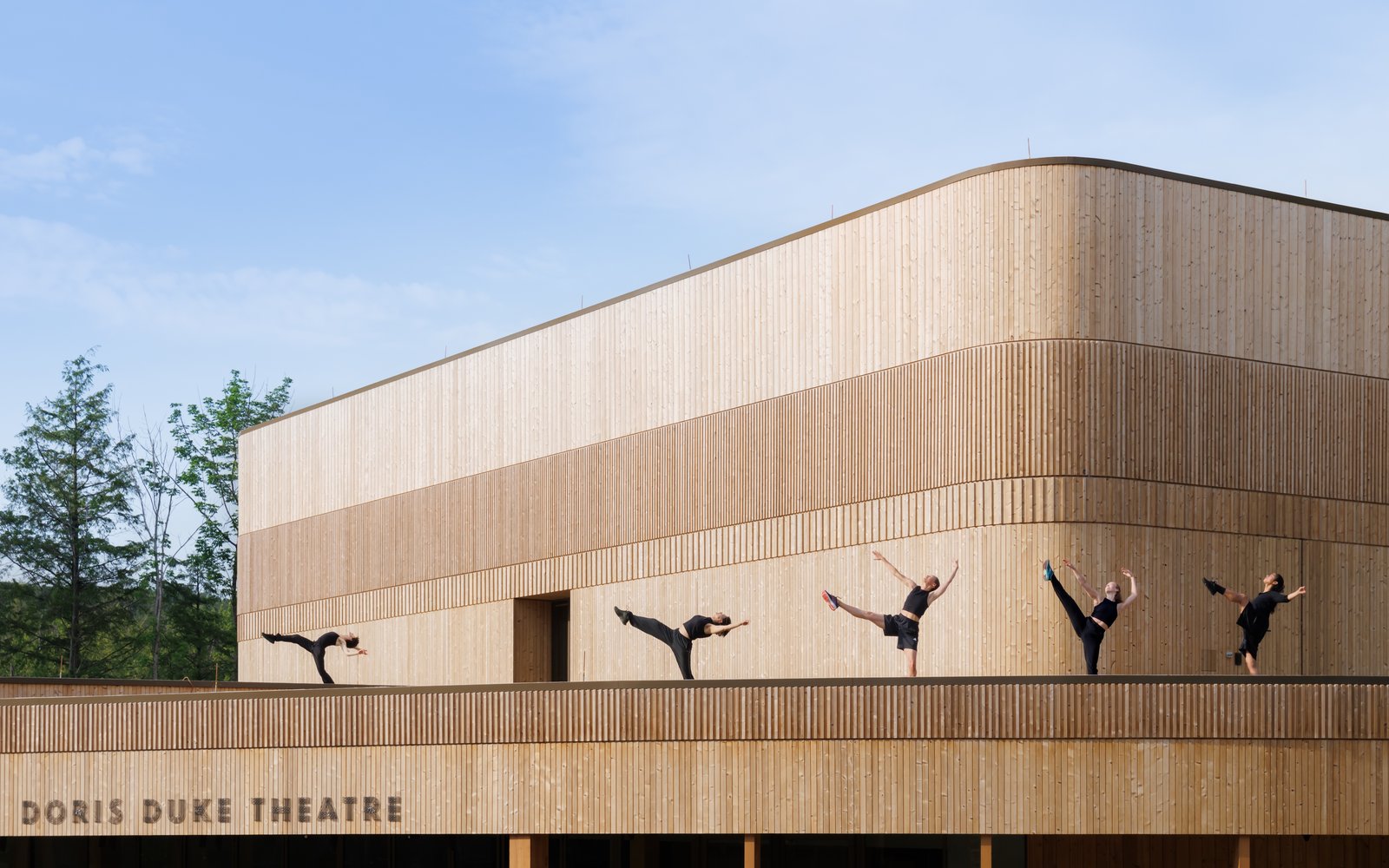
A future-forward theater
Multi-use flexibility allows Jacob’s Pillow to support performances, events, residencies, and more, sometimes simultaneously. Given the flexible nature of the space, the theater seats between 220–400 patrons in the main performance space, offering an array of seating and stage configurations, along with increased accessibility for both patrons and artists. The new Doris Duke Theatre is approximately 20,000 sq. ft., compared with the former Duke’s roughly 8,500 sq. ft. footprint.
Two lobbies with sliding doors create multiple entrances and exits. The west lobby provides a covered and ventilated space for pre-show talks alongside a new exhibition space. The east lobby serves as a warm-up and rehearsal space for artists, and will also host receptions and meetings.
Indigenous design principles and values have been incorporated in the planning for the new theater and Indigenous artists have contributed visual art installations, a medicinal garden with local and indigenous plantings, and a fire pit for gatherings and celebrations. Sustainable initiatives including a green roof, energy efficient design, and rainwater collection and reuse are incorporated throughout the building.
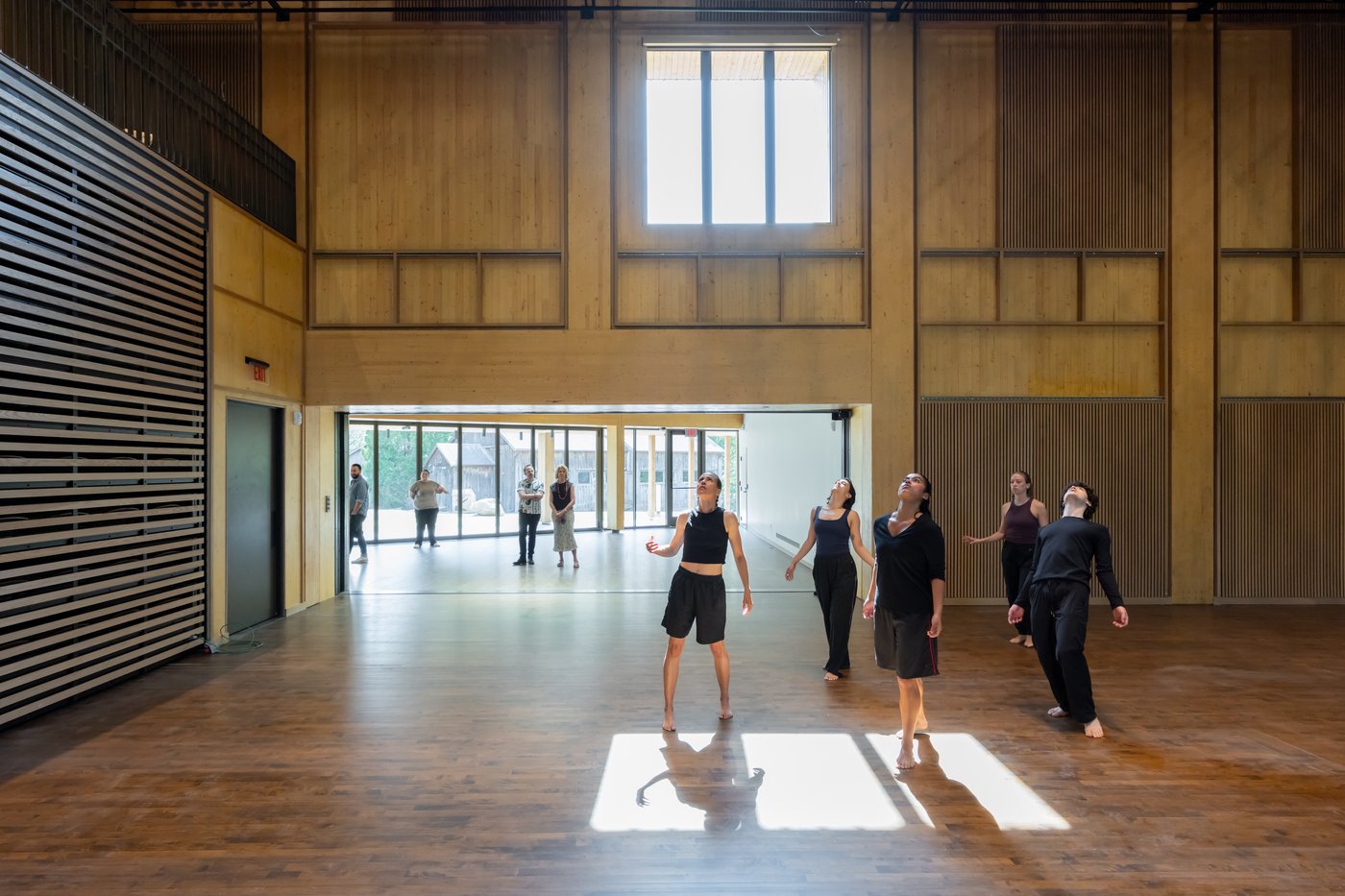
Robust Technology Infrastructure
The new theater is built to meet the creative demands of artists for decades to come, with powerful, intuitive network-based systems and building-wide data and fiber-optic connections. High-bandwidth infrastructure supports projectors and cameras, along with a dedicated video control room for filming, streaming, editing, and broadcasting. A calibrated sound system with digital mixing and a dedicated sound mix position ensure audio precision. The facility also includes a fully equipped workshop for set and mechanical fabrication.
Community and Accessibility
In addition to summer Festival performances, the new building is designed with a year-round, community focus and ease of use for special events. Safety, comfort, and accessibility are improved for audiences, artists, and staff. This includes catwalks for improved technical installation, additional bathrooms, an enlarged green room and dressing rooms for artists, mezzanine access for late seating, and more accessible seating options.
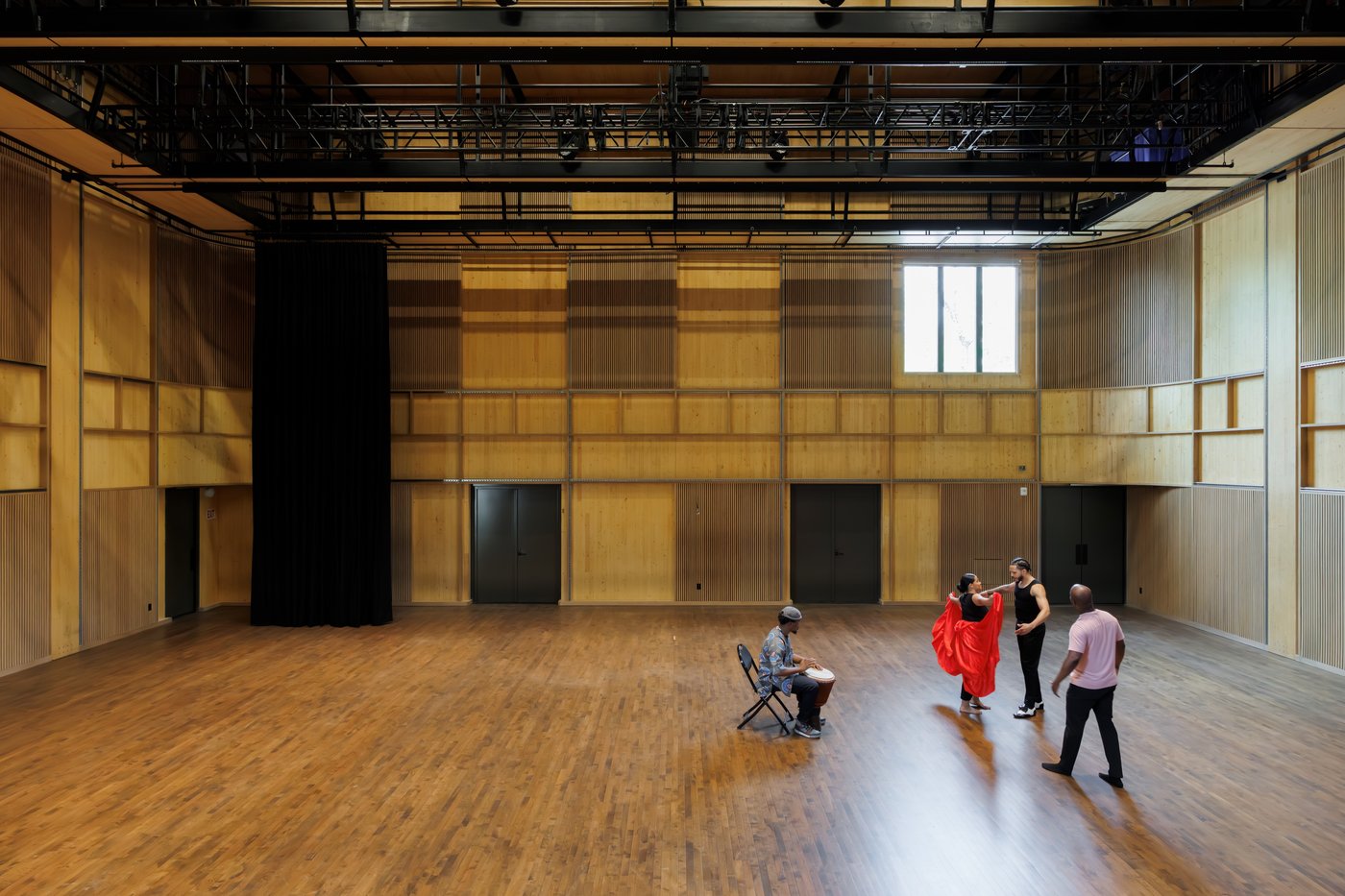
Lead support for Doris Duke Theatre is provided by the Doris Duke Foundation.

This bold project is made possible by generous leadership support. A landmark $10 million naming gift from The Doris Duke Foundation launched the effort in 2022, followed by major contributions from the Knight Foundation, Barbara and Amos Hostetter, the Barr Foundation, Sarah Arison and the Arison Arts Foundation, and the Massachusetts Cultural Facilities Fund, which supported early planning and design.
The overall campaign goal of approximately $35 million includes construction of the new theater, campus-wide capital improvements, and the creation of an endowment to sustain the Doris Duke Theatre’s long-term operations and impact.
A national coalition of donors and funders have already generously committed to support the future of dance and Jacob’s Pillow through this campaign. To learn more about the campaign and how your support can make a difference, please contact, Lila Kanner, Chief Philanthropy Officer, [email protected].

The Pillow seeks to honor the building’s context on the ancestral lands of the Muh-he-con-ne-ok, or Mohican peoples, who are now known as the Stockbridge-Munsee Community and reside in Wisconsin. Additionally, the Pillow honors the Agawam, Nipmuc, and Pocumtuc who also made their homes in what is now known as Western Massachusetts.