Indigenous Garden

About the Project
The land on which we dance is the ancestral homeland of the Muh-he-con-ne-ok or Mohican people. From the start of reimagining the Doris Duke Theatre, Indigenous design principles and values have been central to the planning. A key element of this work has been the partnership between Jacob’s Pillow and commissioned Indigenous artists to envision design elements of the landscape.
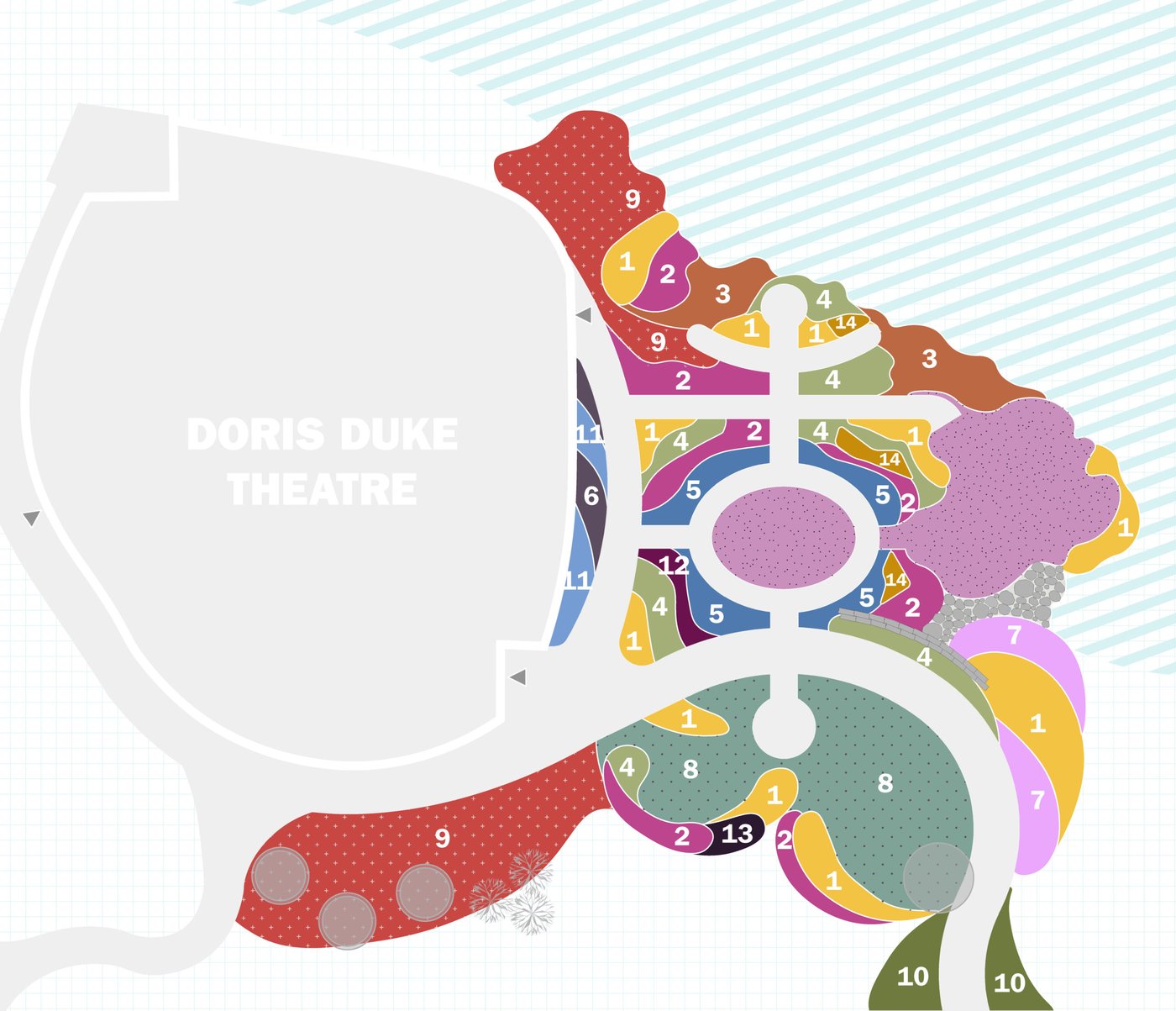
This Indigenous Garden features local and indigenous plantings, a gathering garden with pathways shaped by the Stockbridge-Munsee Band of Mohican Indians’ “Many Trails” Symbol, and a powwow circle, reflecting Indigenous cultural values and fostering connection. The garden was envisioned by commissioned artists Kathi Arnold and Misty Cook (Stockbridge-Munsee), who drew upon Many Trails as a symbol of strength, hope, and endurance.
This work supports our continued efforts with Indigenous partners to build a new theater that respects the multiple heritages of the region, and creates a space for meaningful cultural exchange. Collaborating with Indigenous artists and incorporating traditional cultural practices into the site design has provided an opportunity to further Jacob’s Pillow’s efforts to decolonize the organization and connect with the multiple histories of the land.
About the Many Trails Symbol

The Stockbridge-Munsee Band of Mohican Indians’ “Many Trails” symbol represents the community’s histories of removals and resilience. As described in the history section on the tribe’s website (mohican.com), “The People of the Waters that Are Never Still have a rich and illustrious history which has been retained through oral tradition and the written word. Our many moves from the East to Wisconsin left Many Trails to retrace in search of our history. Many Trails is an original design created and designed by Edwin Martin, a Mohican Indian, symbolizing endurance, strength and hope. From a long suffering proud and determined people.”
The curved shape represents arms raised in prayer. The circles represent many campfires. The lines represent the many trails taken from the time the Mohicans left their ancestral home. But the symbol is not simply a marker of history; it powerfully suggests a model for persistence in the present day. To learn more, visit the Stockbridge-Munsee Community website. For further reading on the Many Trails symbol, consider this 2016 article in the Tribal College Journal of American Indian Higher Education by Jolene Bowman, the Education, Employment, and Training Director for the Mohican Nation.
Plantings
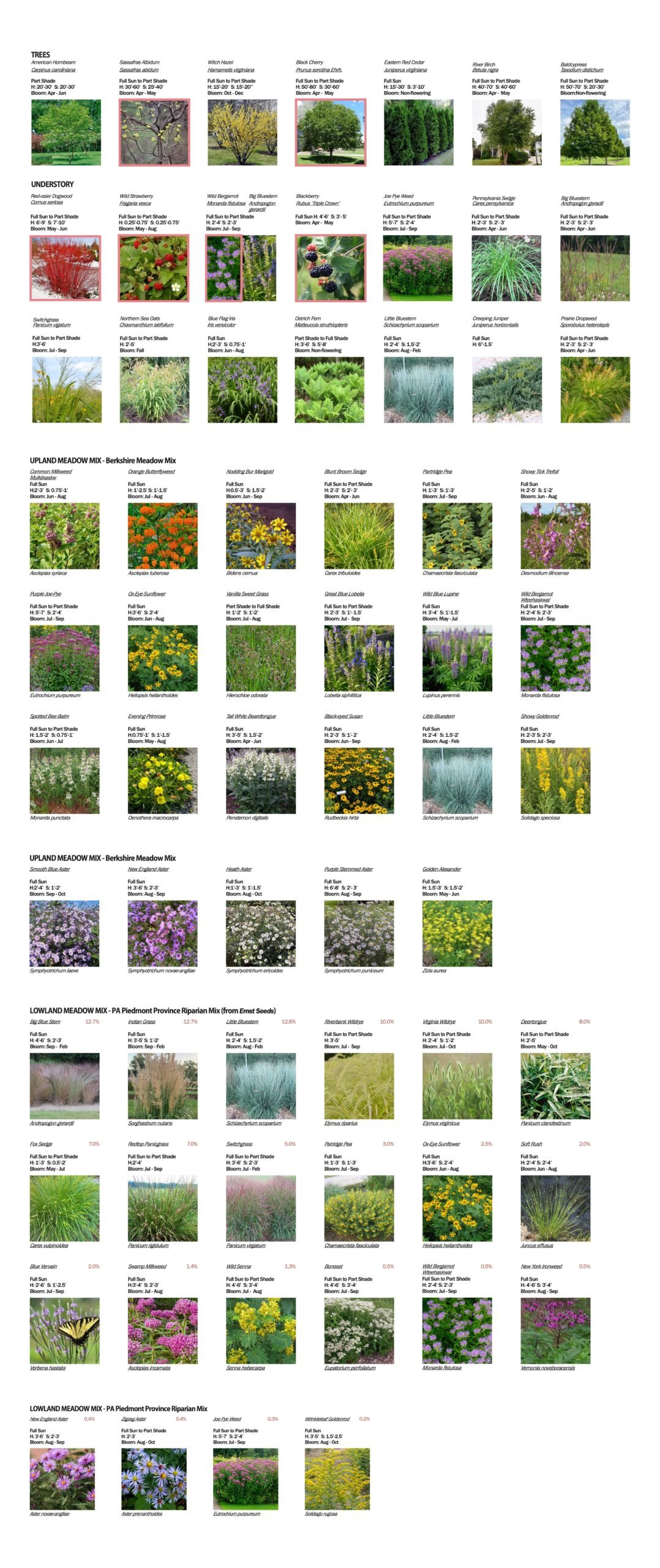
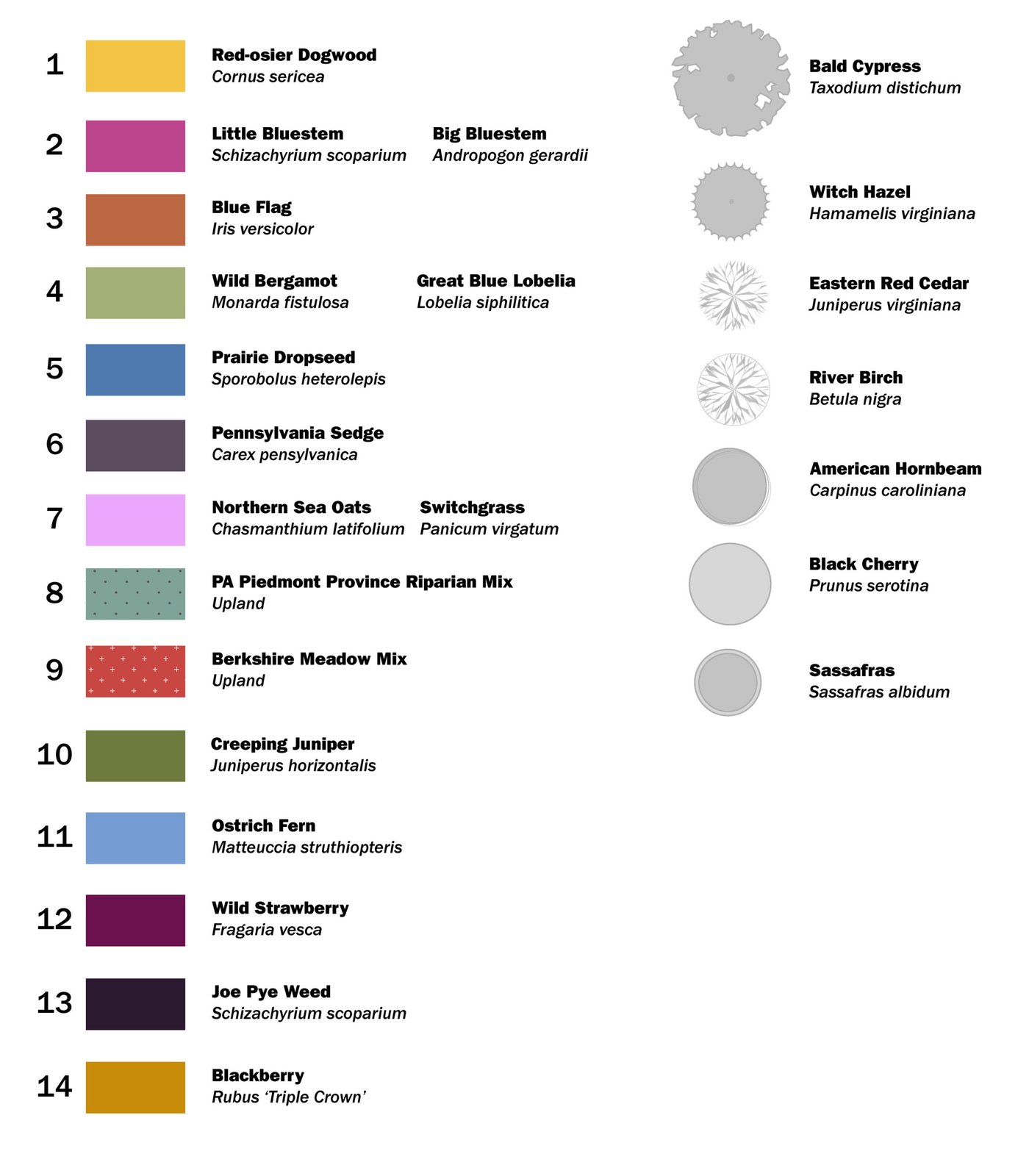
The following plants appear in the Indigenous Garden. For photographs, see the visual key, with edible plants marked by a pink square border around the photos. Scroll down to view a color-coded map of the garden, and click to open any image in a new tab.
Trees: American Hornbeam, Sassafras Albidum, Witch Hazel, Black Cherry, Eastern Red Cedar, River Birch, Bald Cypress
Understory: Red Osier Dogwood, Wild Strawberry, Wild Bergamot, Big Bluestem, Blackberry, Joe Pye Weed, Pennsylvania Sedge, Switchgrass, Northern Sea Oats, Blue Flag Iris, Ostrich Fern, Little Bluestem, Creeping Juniper, Prairie Dropseed
Upland Meadow Mix: Common Milkweed, Orange Butterflyweed, Nodding Bur Marigold, Blunt Broom Sedge, Partridge Pea, Showy Tick Trefoil, Purple Joe Pye, Ox-Eye Sunflower, Vanilla Sweet Grass, Great Blue Lobelia, Wild Blue Lupine, Wild Bergamot, Spotted Bee Balm, Evening Primrose, Tall White Beardtongue, Black-Eyed Susan, Little Bluestem, Showy Goldenrod, Smooth Blue Aster, New England Aster, Heath Aster, Purple Stemmed Aster, Golden Alexander
Lowland Meadow Mix: Big Blue Stem, Indian Grass, Little Bluestem, Riverbank Wildrye, Virginia Wildrye, Deertongue, Fox Sedge, Redtop Panicgrass, Switchgrass, Partridge Pea, Ox-Eye Sunflower, Soft Rush, Blue Vervain, Swamp Milkweed, Wild Senna, Boneset, Wild Bergamot, New York Ironweed, New England Aster, Zigzag Aster, Joe Pye Weed, Wrinkleleaf Goldenrod