Get to Know Nic Gareiss
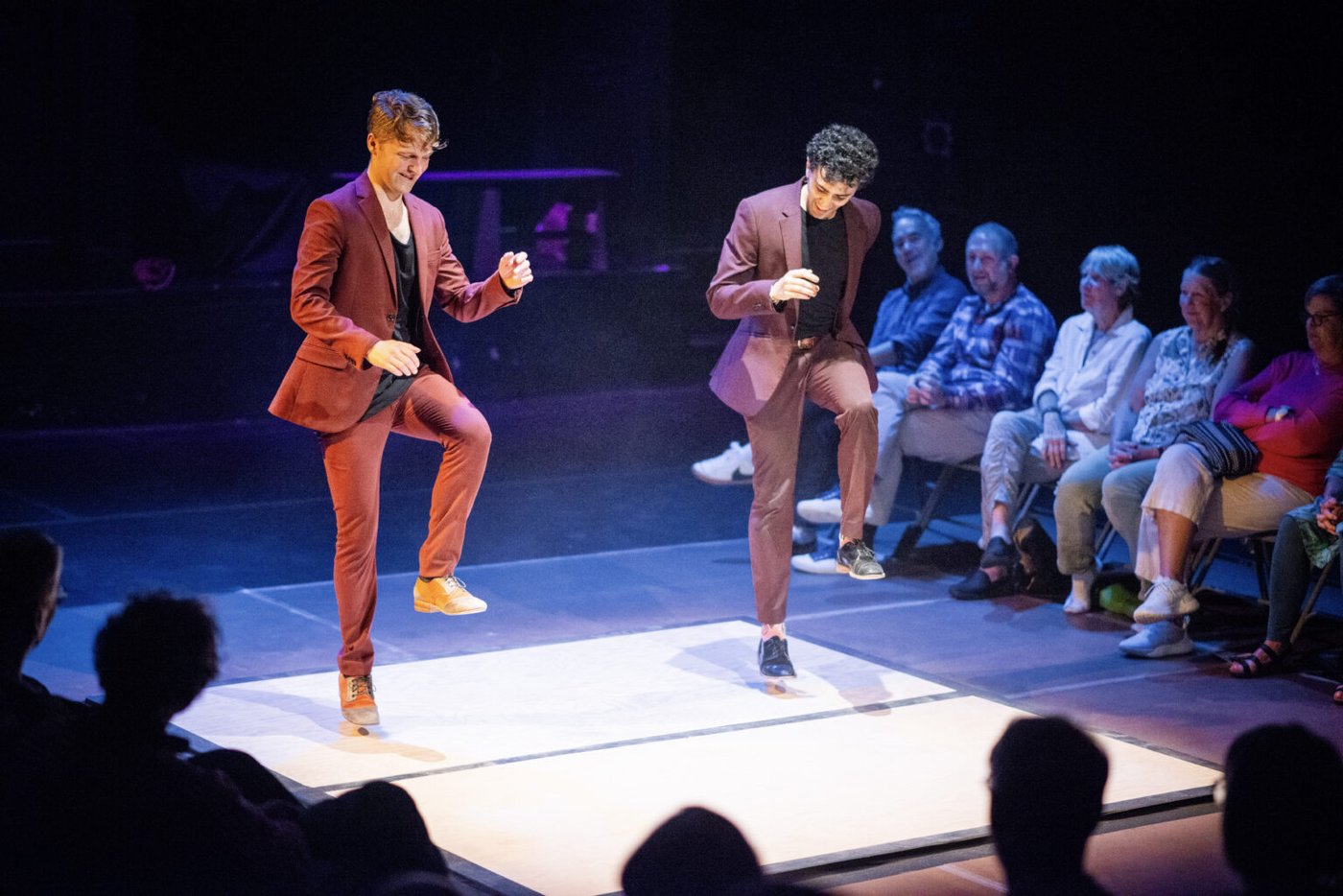
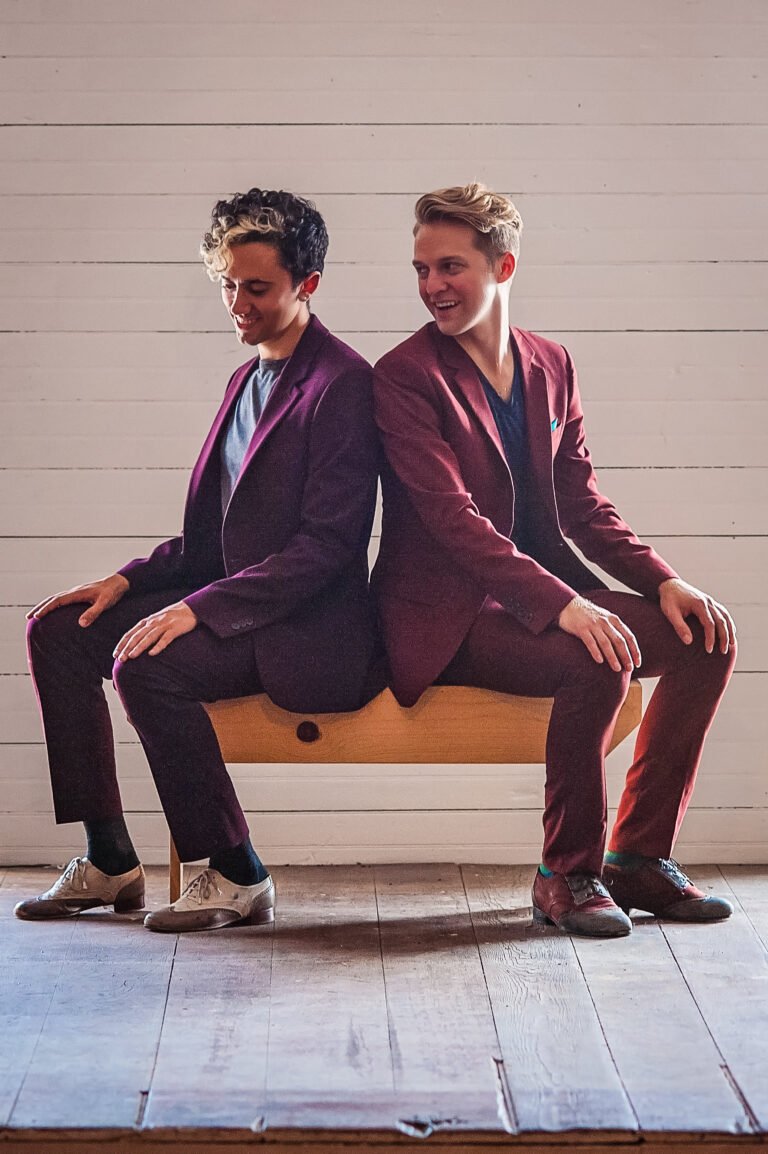
Deemed “an undersung treasure” by The New York Times, Nic Gareiss is a virtuoso in Irish step dance and Appalachian flatfooting traditions. Together with Caleb Teicher, Gareiss weaves together a rich tapestry of folk sounds and improvisation this fall when Jacob’s Pillow presents Caleb Teicher & Nic Gareiss, October 24-26 in the Doris Duke Theatre.
In a performance that feels like a playful conversation between folk and jazz, social and solo dance, Caleb and Nic move and sound together to create a duet that is uniquely their own. In advance of their performances, we had the chance to speak with Nic Gareiss about his connection to Appalachian flatfooting and clogging and what it’s like to collaborate with Caleb Teicher in their mostly improvised performance.
How does it feel to be part of Jacob’s Pillow’s first-ever fall performance weekend?
It feels so great! A lot of the forms that I study and practice as an Irish dancer and Appalachian flatfooter are grounded in rural space. In agrarian time and places, fall is a season of bringing energy in, of celebrating the labor that’s come before, and also preparing, gathering resources for the winter. It’ll be great to bring that energy to the show and to Jacob’s Pillow, and to dance with those ideas in mind through the cultural practices that I study.
What first drew you to Appalachian flatfooting and clogging, and do you have any personal connection to Appalachia?
I first saw Appalachian flatfooting and clogging at a festival where I’m from, in what some people call Michigan. A lot of people may not know that Michigan has a long history of migration from the south in general, and from Appalachia specifically, thanks, in part, to the automotive boom. I grew up going to festivals where I saw people clogging and flatfooting. Some of those people were from the Appalachian region and others were just deeply in love with the sounds and gestures of that dance form. Growing up going to those festivals eventually led to traveling to the Appalachian region over many years to meet and and study with dancers there.
It’s honestly such an invigorating, stimulating, and really enjoyable process to work with Caleb.
What’s it like collaborating with Caleb?
The collaboration with Caleb is such a joy. When I first met them over ten years ago, I instantly felt this rhythmic spark of recognition. And there were a lot of things that we shared in terms of movement, phrasing, tonality, timbre, all kinds of questions around those ideas of percussive dance. And that’s really continued now, over a decade later, through this collaboration. It’s honestly such an invigorating, stimulating, and really enjoyable process to work with Caleb.
Was there anything that surprised you while choreographing this show?
The collaboration is largely improvised. So, one of the things that really surprised me as we were building the show together was how moments of improvisation, these extemporaneous encounters with each other, could constitute an entire show which centers the idea of rapport. Instead of thinking about set choreography, the idea is always that we are responding to each other rhythmically in-the-moment, and that’s going to be different from night to night.
That was one aspect that surprised me the most because I wasn’t actually convinced that we could make a show like that until we did it and performed it for the first time. And from then on, it’s been so spontaneous still every night. That’s one of the things that’s so special about this particular project.
It’s been so spontaneous still every night. That’s one of the things that’s so special about this particular project.
How do you balance choreography with improvisation?
For the few moments in the show that are set, and there are a couple of them, they really emerged out of improvisations. The idea is to try and keep that held really loosely, that there could be a structure that we work within but that we move through in response to each other and in response to the room, the sound of the room, the sound of the audience, and also what’s happening physically for ourselves every night. We never have decided that anything [in the show] is going to be exactly as we have planned it. It’s just not part of the conceit or of the agreement, if you will, of the show between witnesses and performers.
If you weren’t dancing, what would you be doing?
If I weren’t dancing, I’d probably be writing about dance. I publish dance writing and have a background in ethnochoreology, which is like ethnomusicology, but for movement. I also play music. I think being around sound and movement is key for me; if I weren’t dancing I’d still want to be proximate to those things and proximate to the folk forms that I grew up around, all while still trying to have this dynamic dialogue within a contemporary context that I’m mindful of now.
Any funny behind-the-scenes stories from this show’s process you’d like to share?
One time, I remember we were performing the show at The Yard in Martha’s Vineyard, and just as we went on stage–it’s a very quiet beginning of the show that involves a lot of walking, feeling out the floor, getting to know the space and the sound of the space and the sound of the the dance surface. As I stepped out on the floor–I usually go first–from backstage, there was this really strange sound that the backstage fridge was making. It sounded like a drone, maybe some like a sound to tell the person who is near the fridge to shut the door, but it couldn’t be shut! Caleb was backstage and they were trying to figure out how to make this sound stop, and I think eventually they just unplugged the fridge! So people probably had to have warm wine after the show that night. That was one funny moment!
Do you have a go-to hype song before performing?
Before a show Caleb and I are usually improvising together, so really trying to hear each other’s sounds. It’s sort of the opposite of a hype song, actually. We’re trying to really focus our ears, and sort of all of our senses to respond to each other.
We also sing some of the duets in the show as a way to warm up vocally and harmonically. So we might sing through a song that comes from northern England called “Jack and Jill,” where Caleb is dancing. Caleb might sing a song called “Big City Blues” that I dance to. We also sing a duet that’s originally from Charley Patton. Before the start of the performance, that backstage singing is to focus the energy and direct it as opposed to hyping it up. I always want to help the audience to lean in to listen and attune their senses to the detail of sound and gesture, rather than pushing that energy to the back of the room!
Inside the Faculty Research Fellowship with Rain Ross
Inside the Faculty Research Fellowship with Careitha Davis