Trio Con Brio: Bringing the Past to Life
By Lucy Kudlinski
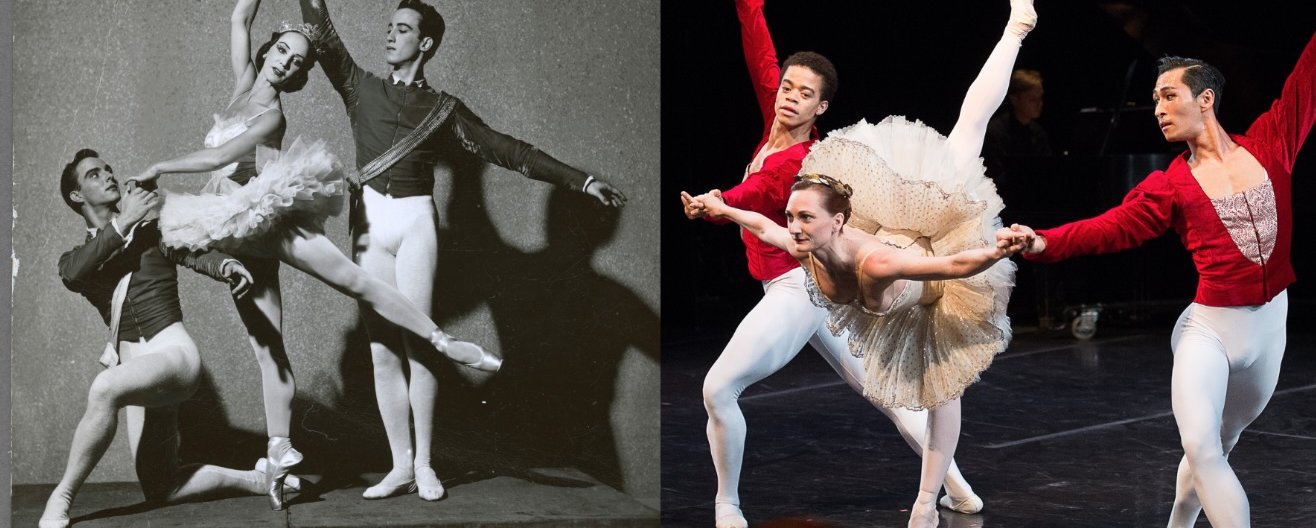
In 2008, Diana Byer of New York Theatre Ballet received a phone call from Jacob’s Pillow Director of Preservation Norton Owen with news that would begin a two year long process to revive a ballet thought to be long lost: Trio Con Brio, a pas de trois by Antony Tudor.
Byer says she was “jumping up and down” after Owen told her about an old, fuzzy, silent 16-millimeter film of one of Tudor’s lost ballets found in the Archives at Jacob’s Pillow. “I was so thrilled that he found it, and so honored that he asked me,” Byer said.
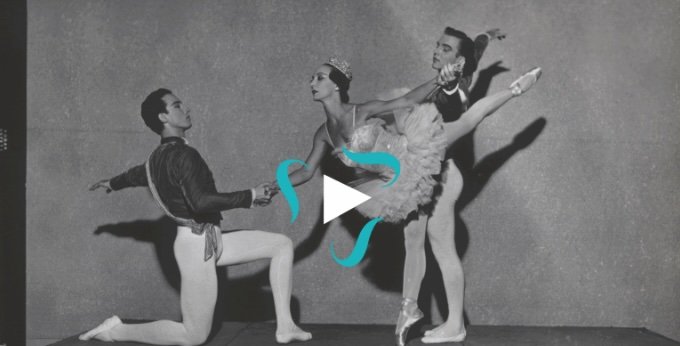
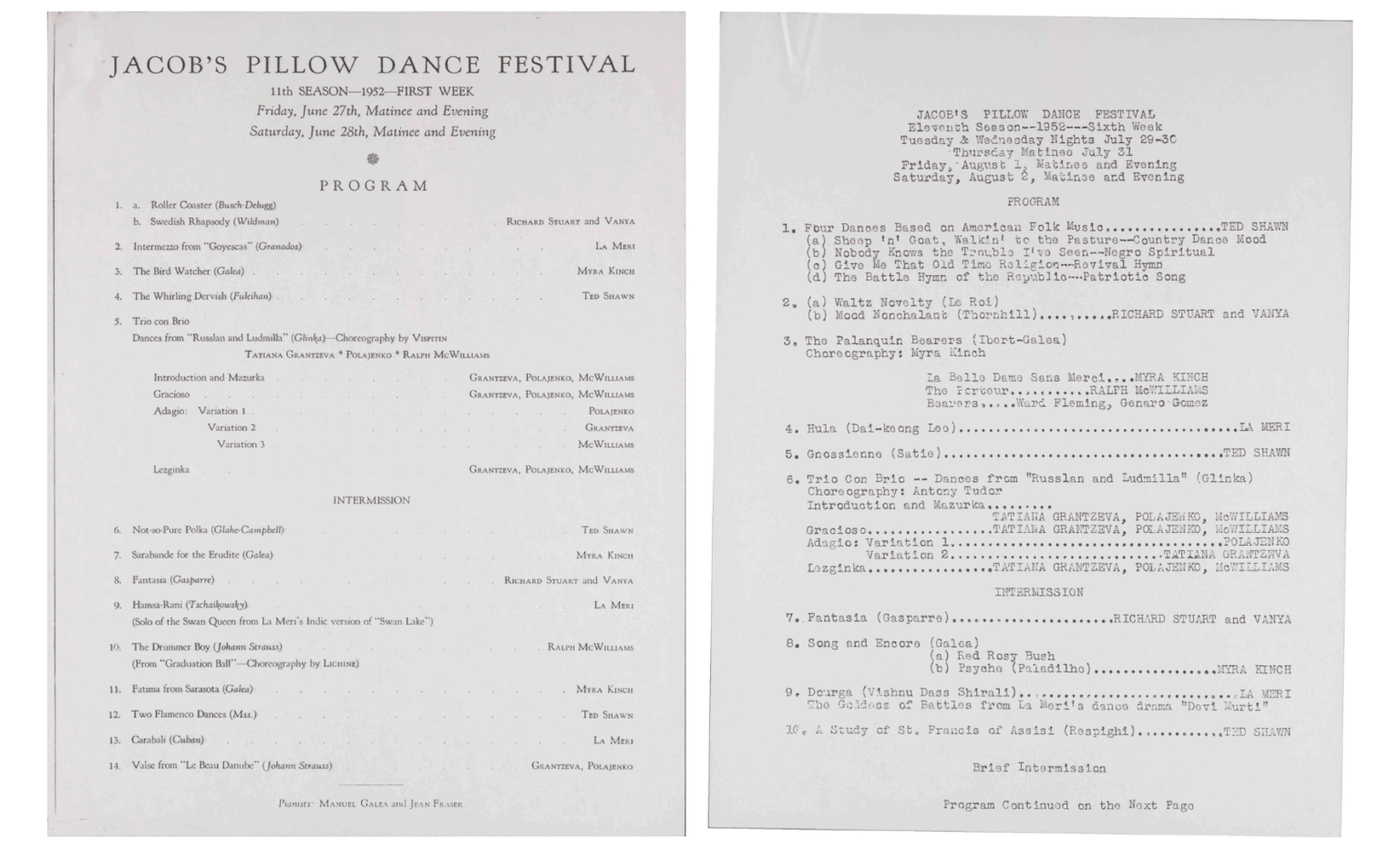
Trio Con Brio was created and premiered at Jacob’s Pillow in June of 1952, where Tudor’s choreography was credited under the fictitious name of “Vispitin.” Byer infers that Tudor presented the work under a different name because the pas de trois was “so unlike anything he had done.” Tudor’s signature style of psychological, character-driven drama was swapped for purely classical aesthetics and tutus.
At the second performance of Trio Con Brio that same summer, however, Tudor was listed in the program as the choreographer. Owen says the reasoning for this change is largely unknown, illuminating how many aspects of a lost ballet remain elusive, and are left to informed, careful hands to create a faithful reconstruction.
One of these primary challenges in recreating Trio Con Brio was setting the music to the movement. Owen discovered the reel-to-reel recording of the music in the Pillow’s archives, and after taking the tape to a sound studio in New York City to be digitized, it was ready for Byer and then music director of New York Theatre Ballet, Ferdy Tumakaka, to utilize in the reconstruction.
Owen emphasizes that the process of setting the music to the movement was not as simple as hitting ‘play’ on the video and the score at the same time, and instead, involved interpretation of “quirky things about how the music was played.”
“It has to do with a certain amount of tweaking… a certain amount of knowledge about classical ballet, or about Tudor’s work,” Owen said.
Byer, who worked with Tudor while studying at Juilliard and brought eight of his ballets to New York Theatre Ballet during her tenure as director, worked tirelessly with Tumakaka and the dancers to piece Trio back together. Tudor’s trademark musical complexity, which makes his work so engaging, made for a “painstaking” reconstruction process for Byer and Tumakaka.
After the two year long construction process, filled with unique hurdles and challenges, Byer said seeing the full, complete work was incredibly rewarding. “It’s so beautiful,” Byer said. “It really is… It’s a stunning pas de trois.”
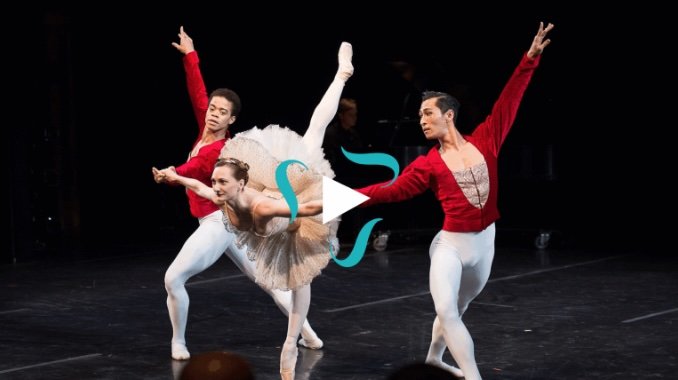
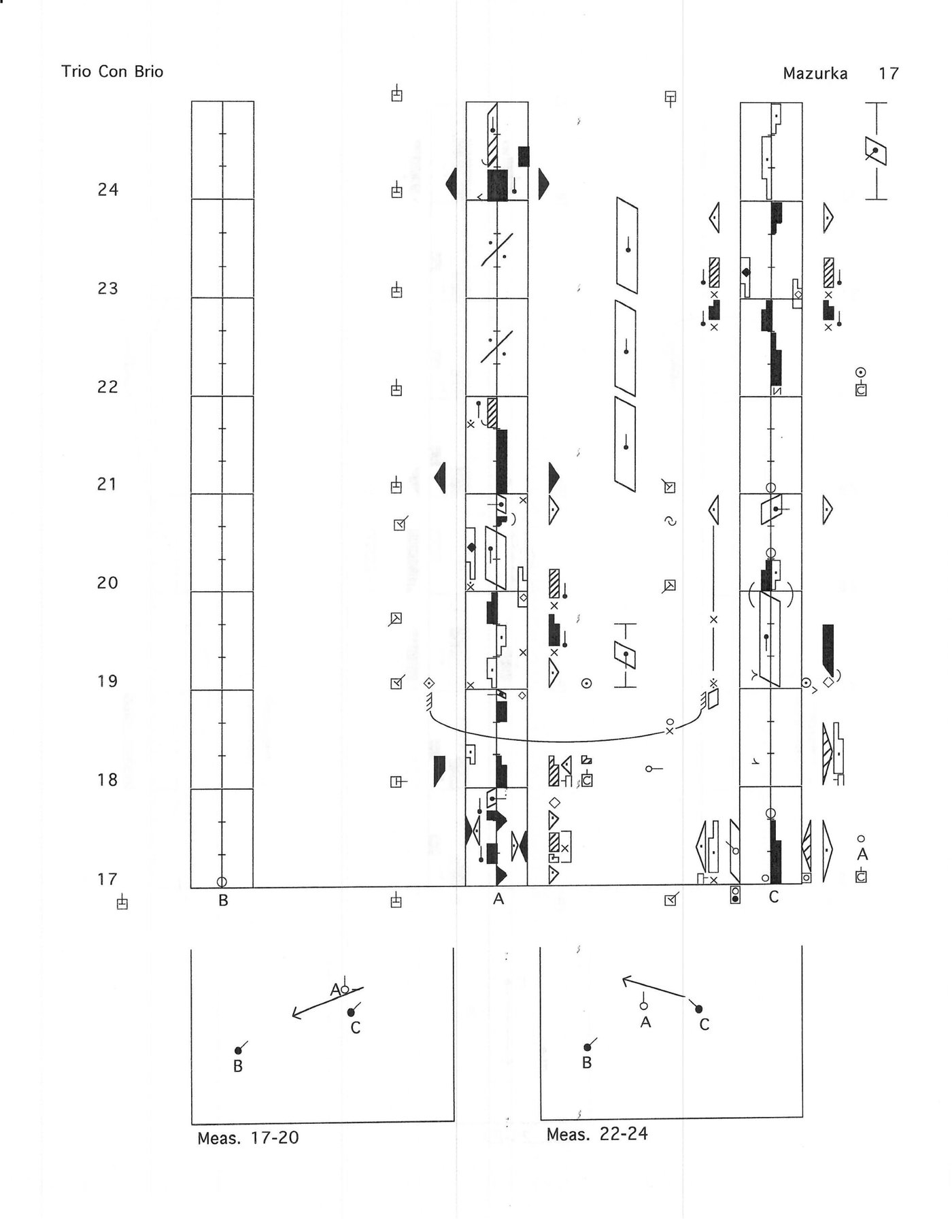
With the efforts of Byer, Owen, and Tumakaka, Trio Con Brio was documented in Labanotation by the Dance Notation Bureau, preserving the work for other companies to perform and shedding light on a little known chapter of Tudor’s choreographic legacy.
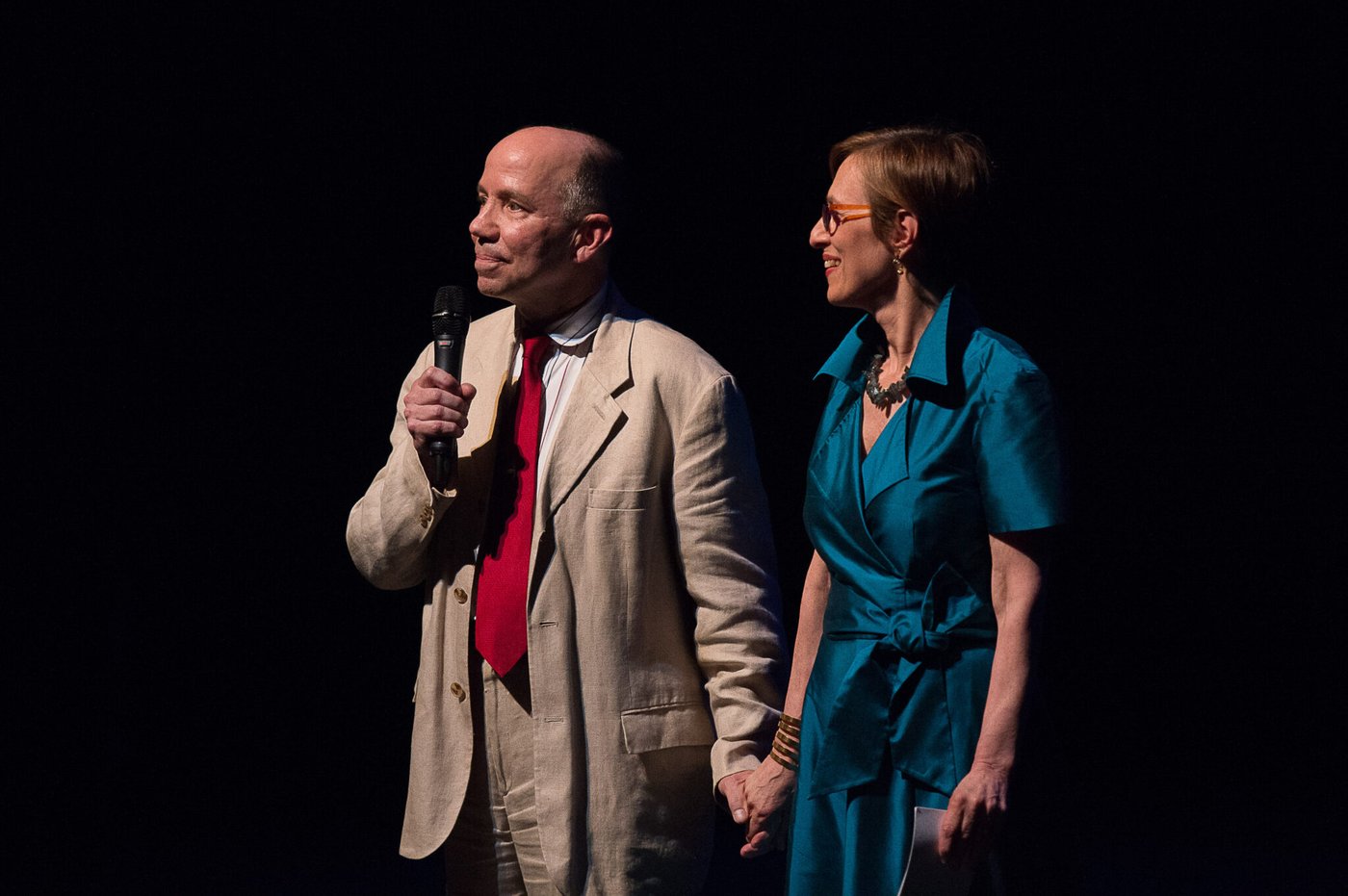
The reconstruction of Trio Con Brio by New York Theatre Ballet had its first public performances at Jacob’s Pillow in 2015 in a celebration of the Archives’ physical expansion, inaugurating the Norton Owen Reading Room. This event also marked the 40th anniversary of Owen’s career at the Pillow, highlighting how Owen’s work goes beyond maintaining a robust catalogue of archival material and extends onto the stage.
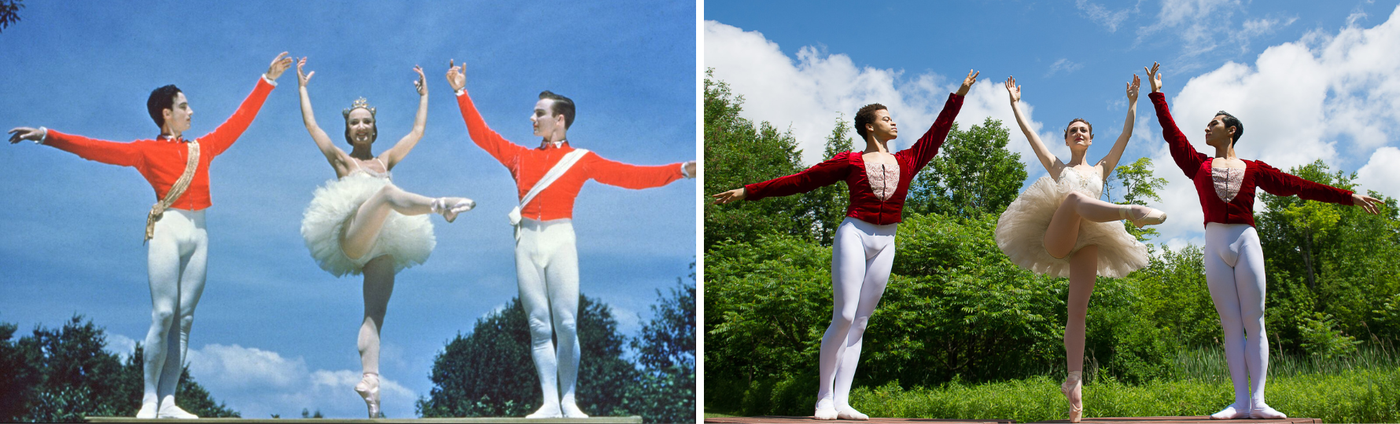
10 years later, New York Theatre Ballet was scheduled to return to the Henry J. Leir Stage in 2025 with a diverse program including Trio Con Brio, coinciding with the celebration of Owen’s 50th anniversary
“It’s a way of bringing the work that I do forward and saying, ‘Oh, it’s not just about a piece of writing, or something that you put on the wall,’” Owen said. “It also has to do with something that you can see on the stage, something that is brought to life in that way.”
Inside the Faculty Research Fellowship with Rain Ross

Inside the Faculty Research Fellowship with Careitha Davis