What Gets Lost When the Body Becomes Data
Ilya Vidrin will make his Pillow debut this summer in the Doris Duke Theatre. In this guest post, he considers dance, technology, and the limits of what can be captured.
When I ask two dancers to move together, I don't give them counts.
I don't hand them a score that tells them when exactly to shift their weight or when to yield. What I give them instead is an orientation: everything you do matters, no matter what you do. From there, the movement unfolds collaboratively.
This might sound like shirking my choreographic responsibility. But what it actually does is return the dancers to something more fundamental than timing or sequence—it returns them to attention. To the continuous, unspoken negotiation happening between two bodies in space. To the micro-adjustments, the pressure and release, the reading of another person's potential energy before it becomes kinetic. This kind of attunement is deeply exciting for me. And it raises a question I keep coming back to: how can this subtle physical negotiation, which is so often invisible, be amplified for an audience?
That question is at the center of Proxies, a dance theater production I've been developing since 2023 with a brilliant team of collaborators, including multi-instrumentalists Mel Hsu and Eric Seligman, designer and data visualization artist Steven Geofrey, technologist Peter Martel, and a cast of Boston-based dancers. The piece is, on one level, a performance. On another, it's a provocation—about data, about bodies, and about what we lose when we try to represent lived experience as information.
The Loop
In its current form, "Proxies" begins with a duet.
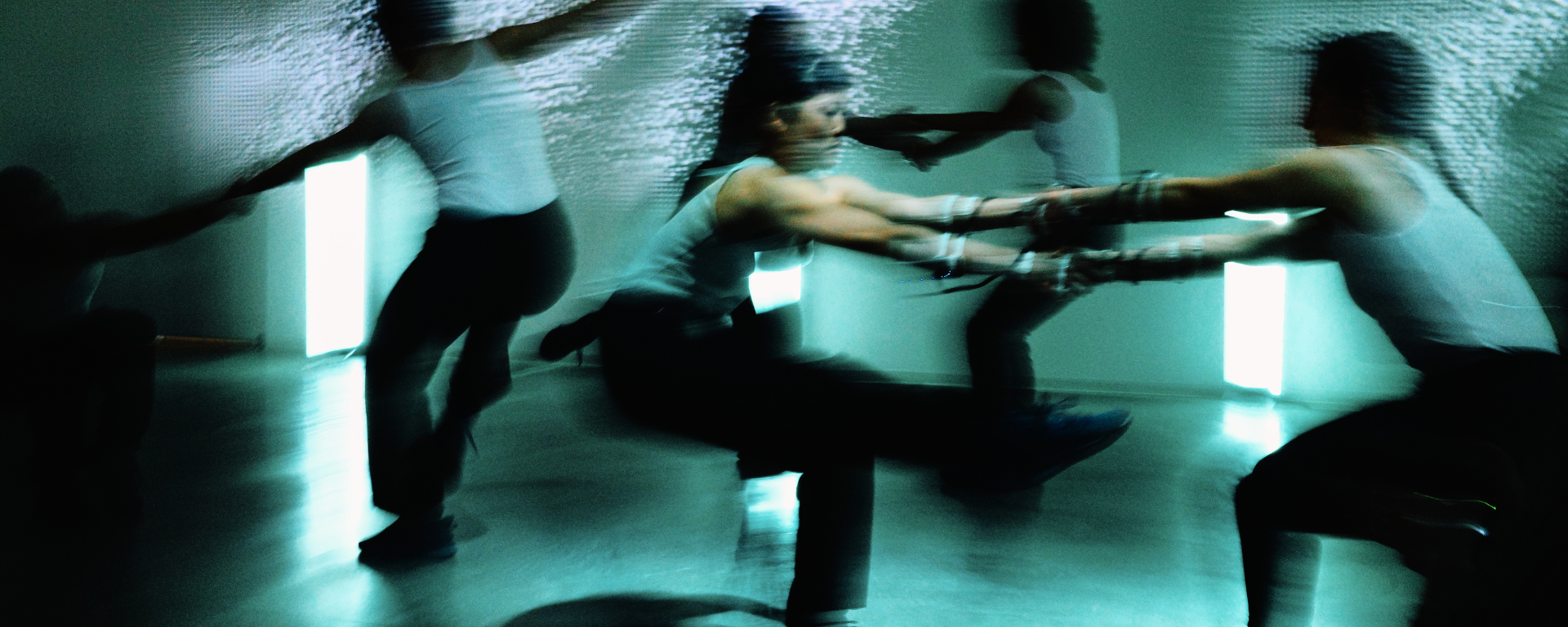
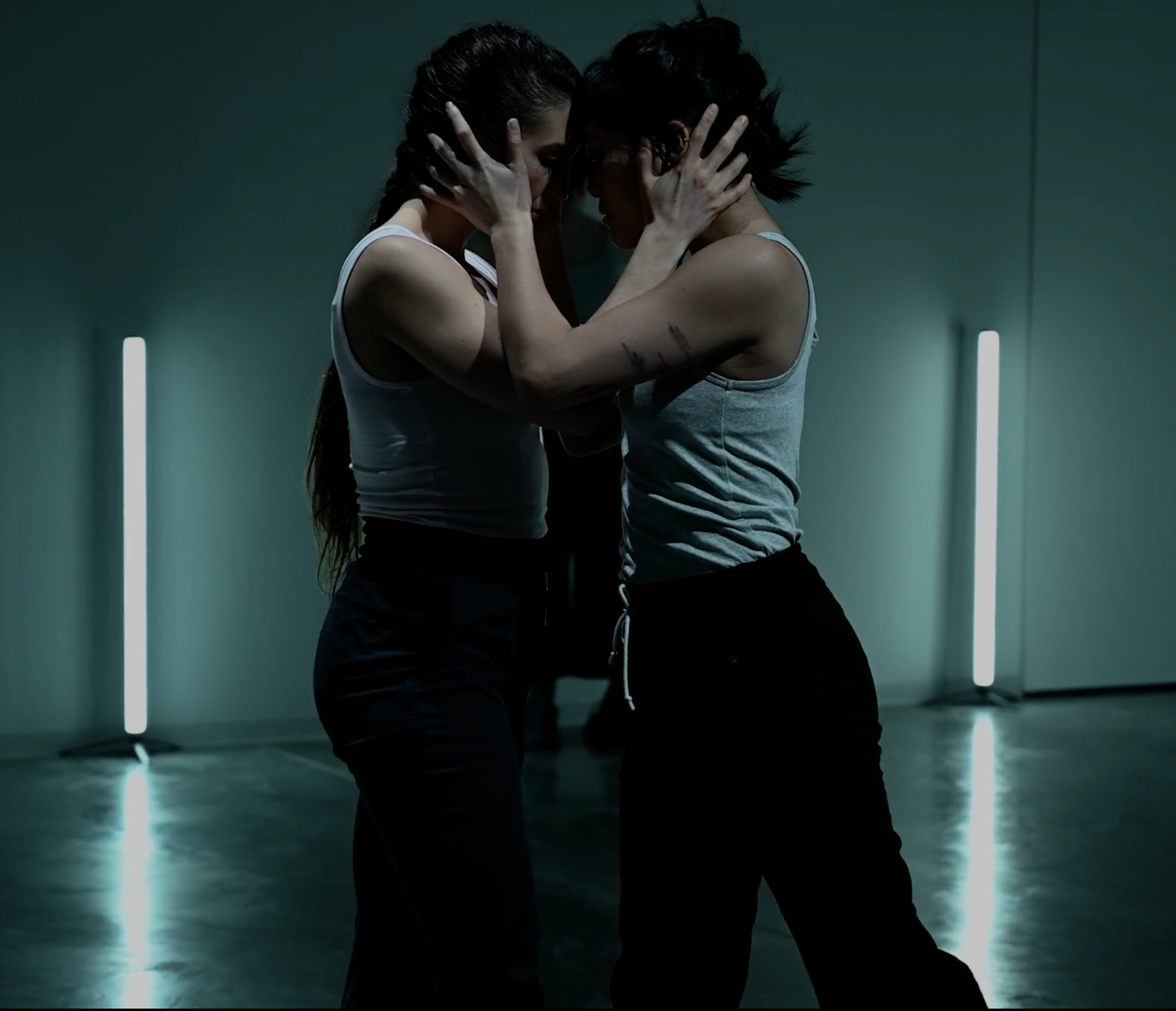
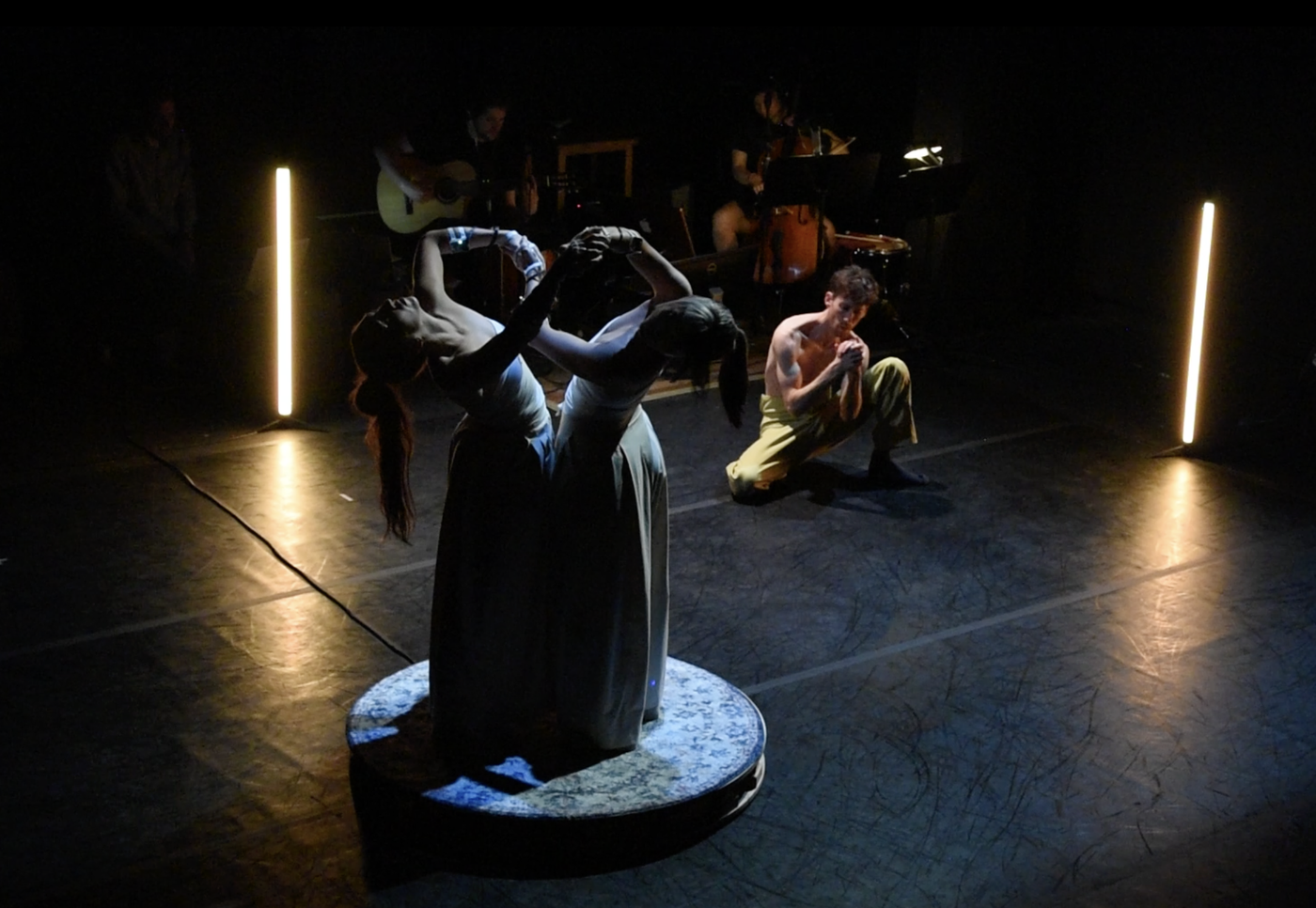
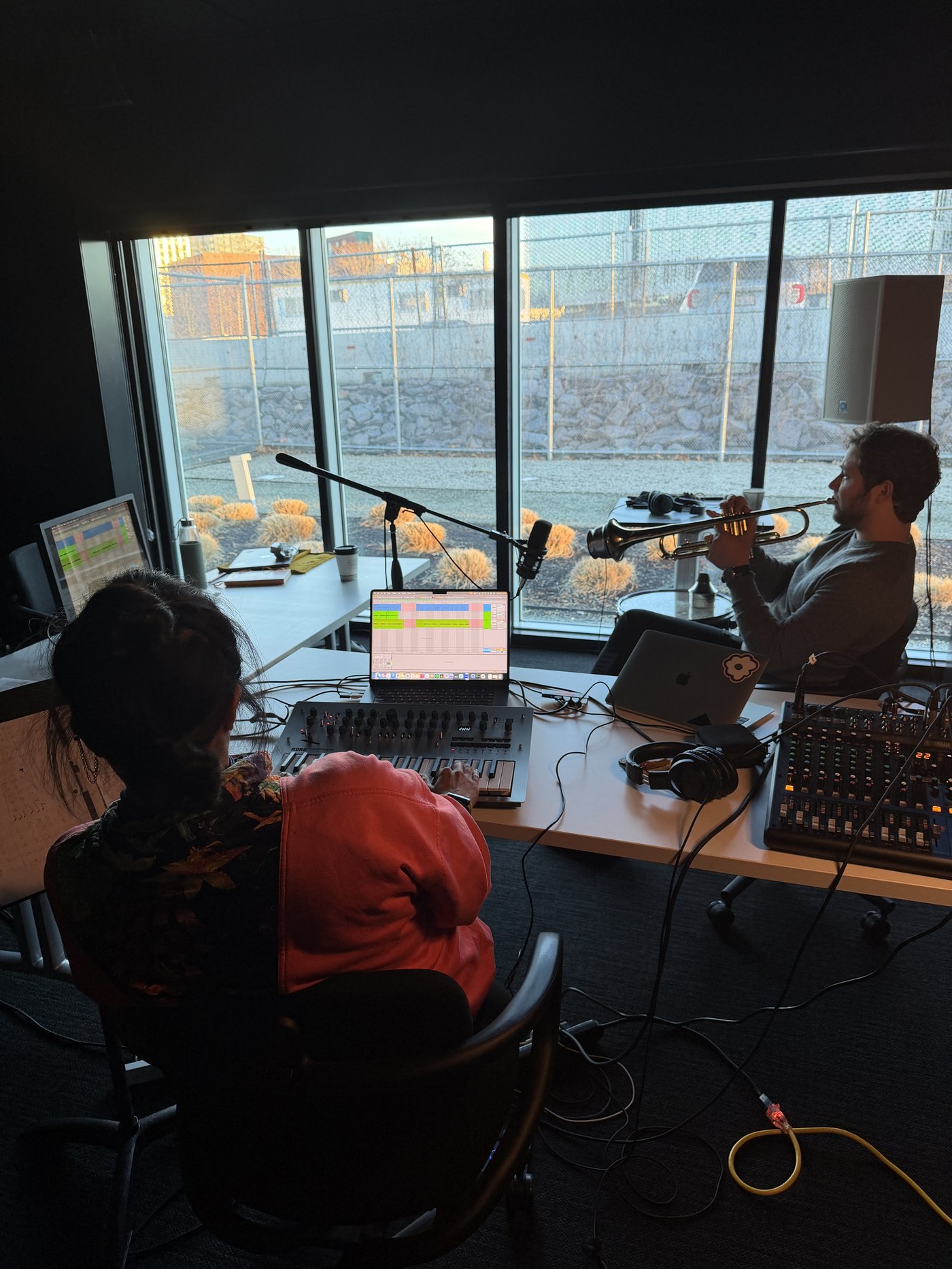
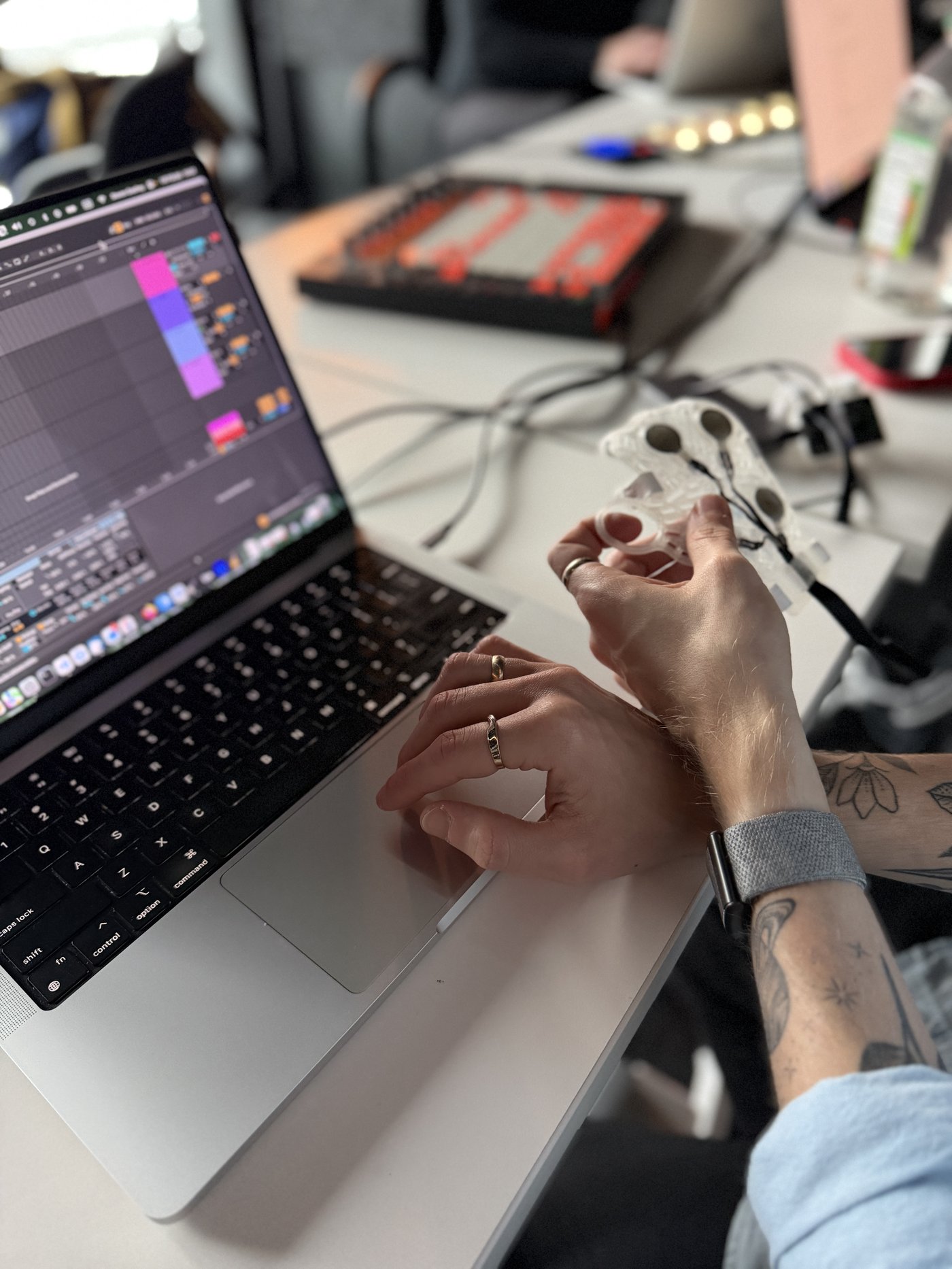
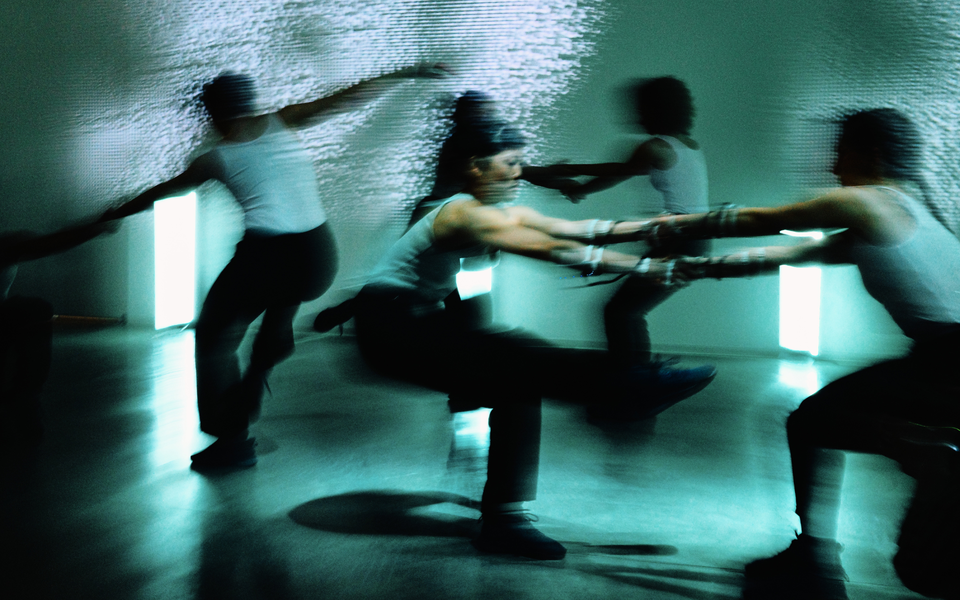
Two dancers, wearing custom-fabricated gloves and insoles fitted with pressure sensors, move together in a sustained investigation of proximity, orientation, and touch on a slowly rotating platform. The movement is structured but not fixed. It emerges from the conditions between the dancers: who they are that day, how they're listening, where the gravity pulls.
As they move, the sensors capture changes in intensity, duration, and location of pressure across their hands and feet and stream that data in real time to a computer. Many of the subtle shifts of the dancers are not visible to the audience, yet robustly experienced within their interaction. This provocation is a reminder that dance is not just a visual art form—it is a kinesthetic one, too. This is the distinction between “dance”—the movement we watch on a stage, and “dancing”—the practice in which we engage physically.
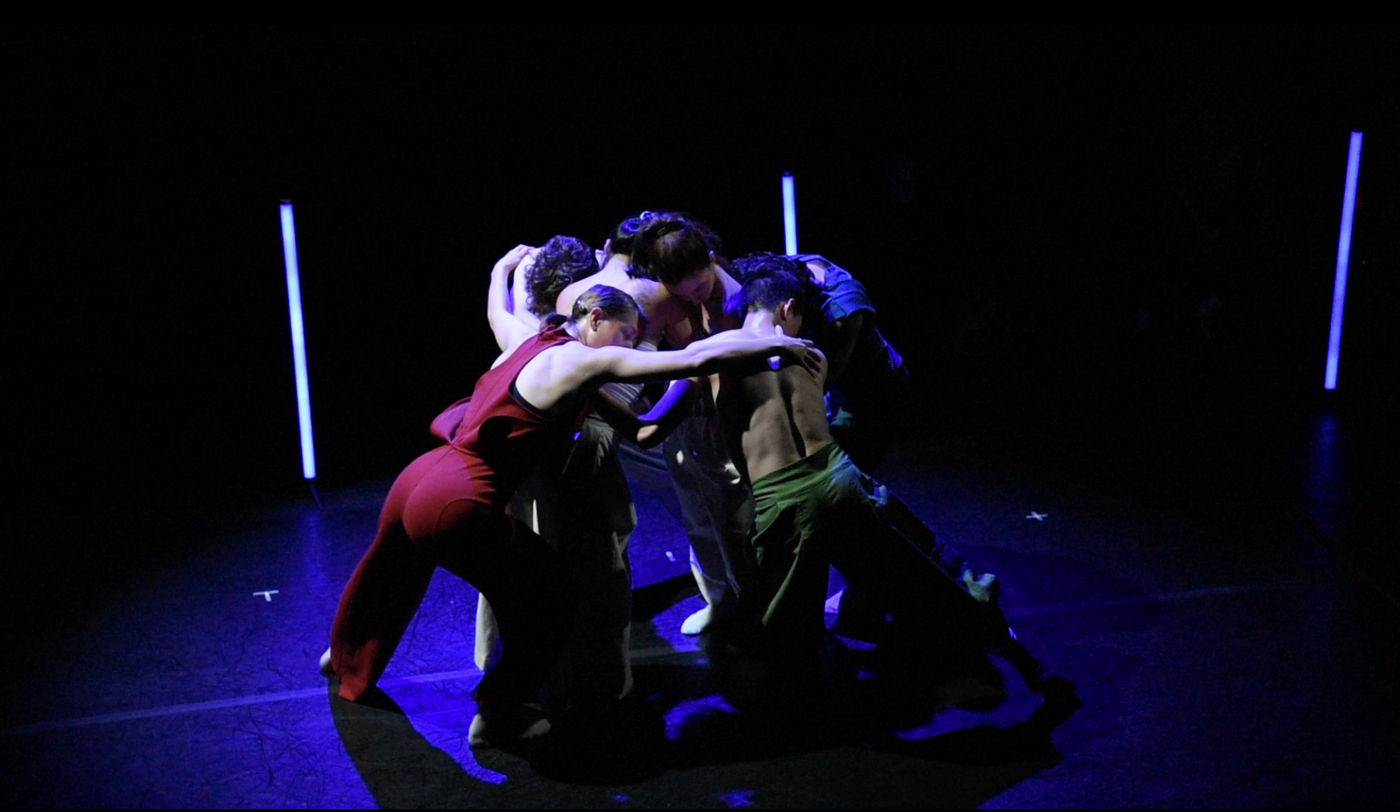
The data are translated in several ways—to Ableton, a software which affects the sounds the musicians make; to the light board, which affects the atmosphere of the space; to the speakers, which affects where the sounds come from; and to a projected visualization: a dynamic, particle-based display that encodes shifts in pressure as visual movement. Using material from Tchaikovsky's Fifth Symphony, the musicians respond to what they see—adjusting timbre, rhythm, volume, instrumentation. Their sound washes back over the dancers. The dancers respond with their bodies. The sensors capture that response. The loop continues. Each iteration is shaped by the one before it. Nothing repeats exactly. I think of the loop as a kind of living structure—an engine of transformation that accumulates its own history as it runs.
What "Proxy" Means
The title carries two meanings, and I want them both to stay in tension.
The first is the familiar one. A proxy is a stand-in—something that represents something else in its absence. We use proxies everywhere. Fitness trackers as proxies for health. User names as proxies of identity. Engagement metrics on social media as proxies for connection. Credit scores as proxies for trustworthiness. The logic is seductive: if you can measure something adjacent to what you care about, you can act on the measurement instead of the thing itself. I have been interested in the way that touch is a proxy for connection, and pressure is a proxy for attention and care.
The second meaning is more specific to this piece. In Proxies, the wearables are explicitly functioning as proxies for the kinesthetic experience happening between the dancers—they are capturing a signal, not the thing itself. And I want audiences to feel that gap. Not to feel cheated by it, but to become curious about it. What is the difference between the movement and the data the movement produces? What did the sensors pick up, and what did they miss?
These aren't rhetorical questions. They're the actual questions driving the work.
The Fidelity Problem
Here is something I find genuinely strange about working with sensors: the data can be technically accurate, but still incomplete in what they capture.
When one dancer absorbs the momentum of another—when she takes a force traveling toward her and redirects it, transforming potential energy into a new direction—the sensors register changes in pressure on the palms and soles of her feet. Numbers shift. The visualization, lights, and microphones respond. But the outputs cannot know that this was an act of care. They cannot register the kind of hesitation before yielding, or the question embedded in the gesture, or the years of training that made that particular absorption possible.
There's a concrete example of this problem in the current version of the piece. The particle system in our visualization coalesces—becomes more visually stable—when overall pressure from the sensors increases. But in the body, an increase in pressure often signals the opposite of stability. It signals potentiality. The charged moment before a leap or a fall. The gathering of energy before something unpredictable happens. So there are moments when the visualization reads energy as settling while the body is preparing to explode. The image and the flesh are telling different stories about the same event.
I don't think of this as a technical failure we need to fix. I think of it as the piece's central argument, playing out in real time.
Why Technology, Then?
If the technology introduces effects at every layer of the loop, a reasonable question is: why use it at all?
Part of my answer is that the effects are the point. The gaps between movement and data, between data and image, between image and sound—these aren't just interesting design problems. They're a mirror held up to something much larger. We live in a world where our bodies are increasingly measured, tracked, and represented to us as data. Wearables count our steps and our sleep. Algorithms infer our moods. Health systems make decisions based on numbers abstracted from the person those numbers are supposed to describe. In each case, something is being captured—and something is being missed.
Proxies doesn't make that argument didactically. It enacts it. The dancers wear their sensors and keep moving. The technology is present; the humanity persists. And somewhere in that persistence is what I'm most interested in—the parts of embodied experience that simply don't fit in the data, the dimensions of relating that no proxy can adequately hold.
This work has genuinely changed how I think about technology. Working closely with sensors and visualization has sharpened my sense of what movement actually is—what its information content might be, and where that framing breaks down entirely. There's something clarifying about trying to translate an experience into a different medium and discovering, with precision, where the translation fails.
What We're Still Figuring Out
I keep returning to whether we're reading the sensor data at the right scale.
Currently, each sensor is treated as an independent proxy of movement. But partnered movement doesn't work that way. What's meaningful is often the coupling—one hand and the opposite foot firing simultaneously, a signature of a particular kind of weight transfer. We're exploring how to read those couplings as proxies of specific partnering interactions, something that would better honor the continuous negotiation happening between the dancers rather than reducing it to isolated pressure events.
There's also a deeper question about visualization itself. Using a visual encoding as the translation medium adds a layer of distance between movement and sound—it routes kinesthetic experience through the eye before it reaches the ear. Other encodings might do this translation work more directly: haptics, lighting, real-time manipulation of sampled audio. These would keep the data closer to the body, though they'd also remove some of the interpretive indeterminacy that I find generative in the current version. There's something valuable about the musicians having to make judgment calls about what they're seeing. That uncertainty is doing real work in the piece.
And then there's the audience. One of my goals is to prime viewers to return attention to their own bodies—to leave the theater with a heightened sensitivity to the kinds of micro-negotiations the dancers are practicing. But I'm genuinely uncertain about the best way to do that. A workshop before the performance? An interactive experience that gives people a chance to feel the technology before they watch it? These aren't just production questions. They're questions about how attention works, and how art can cultivate it.
Process as the Work
More than anything, I think of Proxies as a meditation on process.
Not a meditation that happens privately and then gets presented as a finished product—but one that is surfaced in the performance itself. The loop the audience watches is the same loop we've been living inside for years: trying to capture something, discovering what we missed, trying again.
The recursive structure of the piece reflects something I believe about choreography in general: that the process of creating, observing, and experiencing movement—really attending, with full care and curiosity—is itself a form of knowledge. Not knowledge that can be easily extracted and stored, but knowledge that lives in the body, in the relationship between bodies, in the ongoing negotiation of shared space.
Data can point toward that knowledge. Visualization can gesture at it. Music can evoke it. But the thing itself—the attunement, the presence, the quality of contact between two people moving together—remains, stubbornly, irreducible.
That's not a failure of technology. That's an argument for paying closer attention to each other.
Written by Ilya Vidrin. Published June 2026. Photos from the creative process, taken in 2025 and 2026, courtesy of Ilya Vidrin.
Read More Pillow Picks
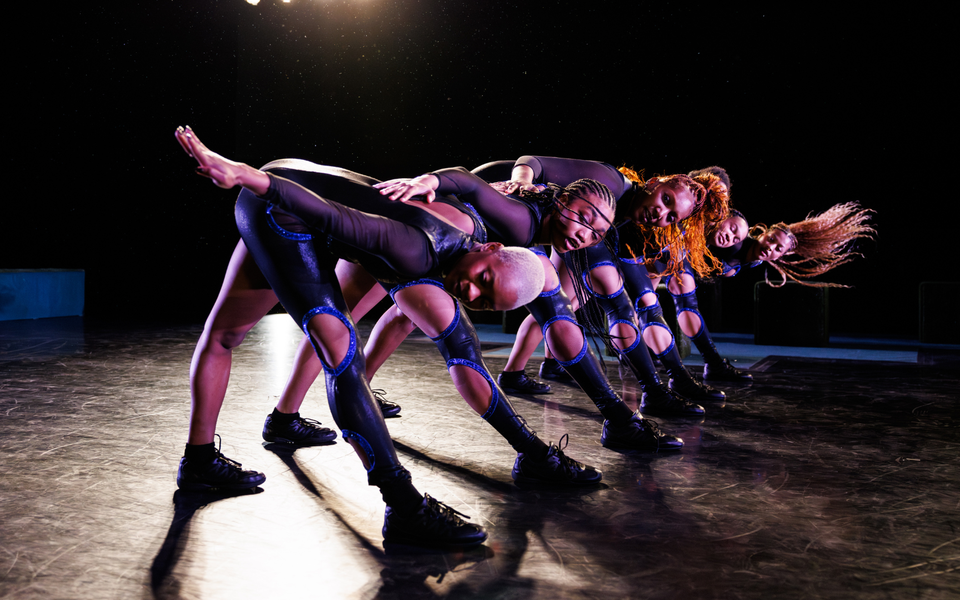
Ogemdi Ude on commanding energy and effort in "MAJOR"
Ogemdi Ude’s "MAJOR" explores the physicality, history, and politics of majorette dance. We spoke with Ude about the work, diving into how collaborators have revisited their past selves and formed connections with majorette dancers today.
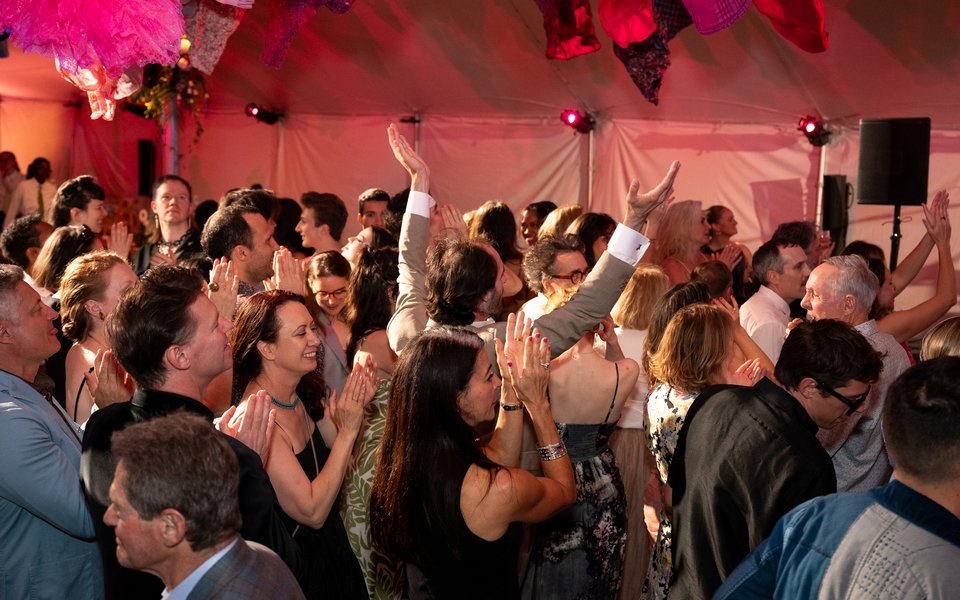
Behind the Magic: Moments of Connection at the 2026 Season Opening Gala
What Gets Lost When the Body Becomes Data
Ilya Vidrin will make his Pillow debut in Festival 2026 with "Proxies." In this guest post on the Pillow's blog, he considers dance, technology, and the limits of what can be captured.