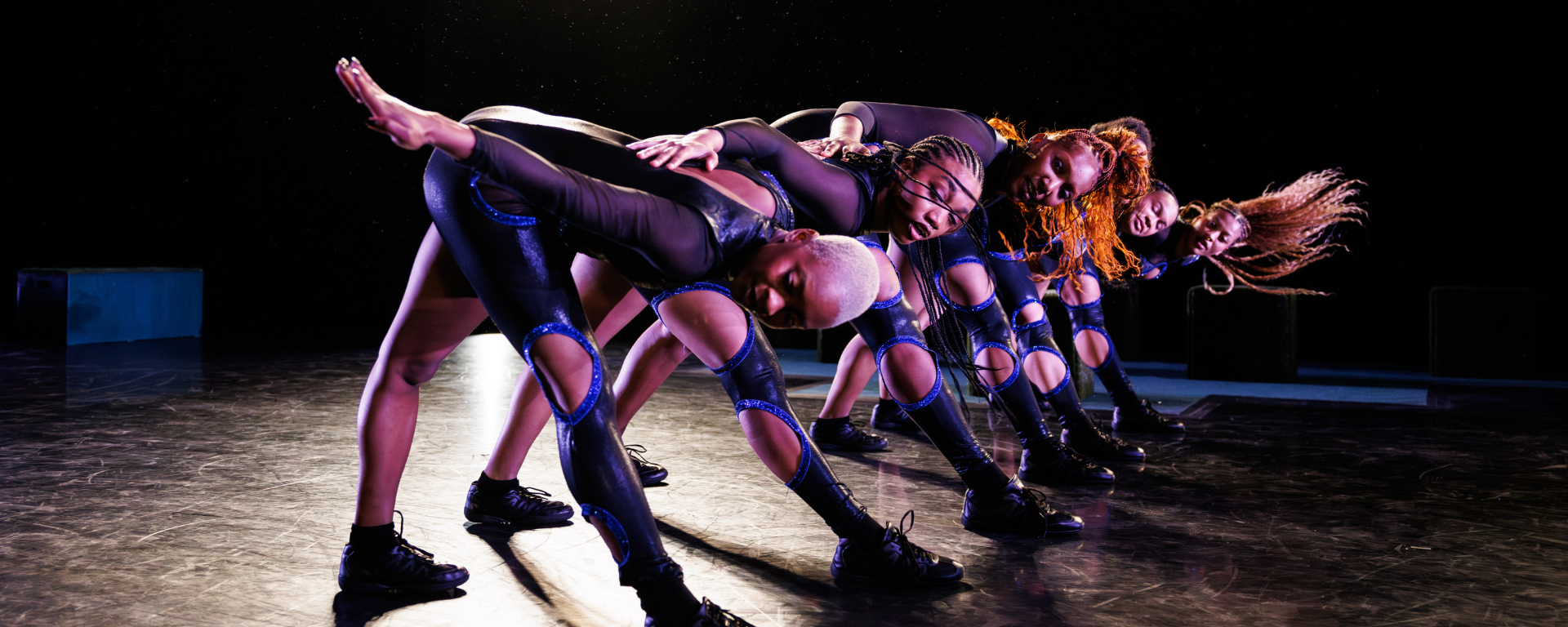
Ogemdi Ude on commanding energy and effort in "MAJOR"
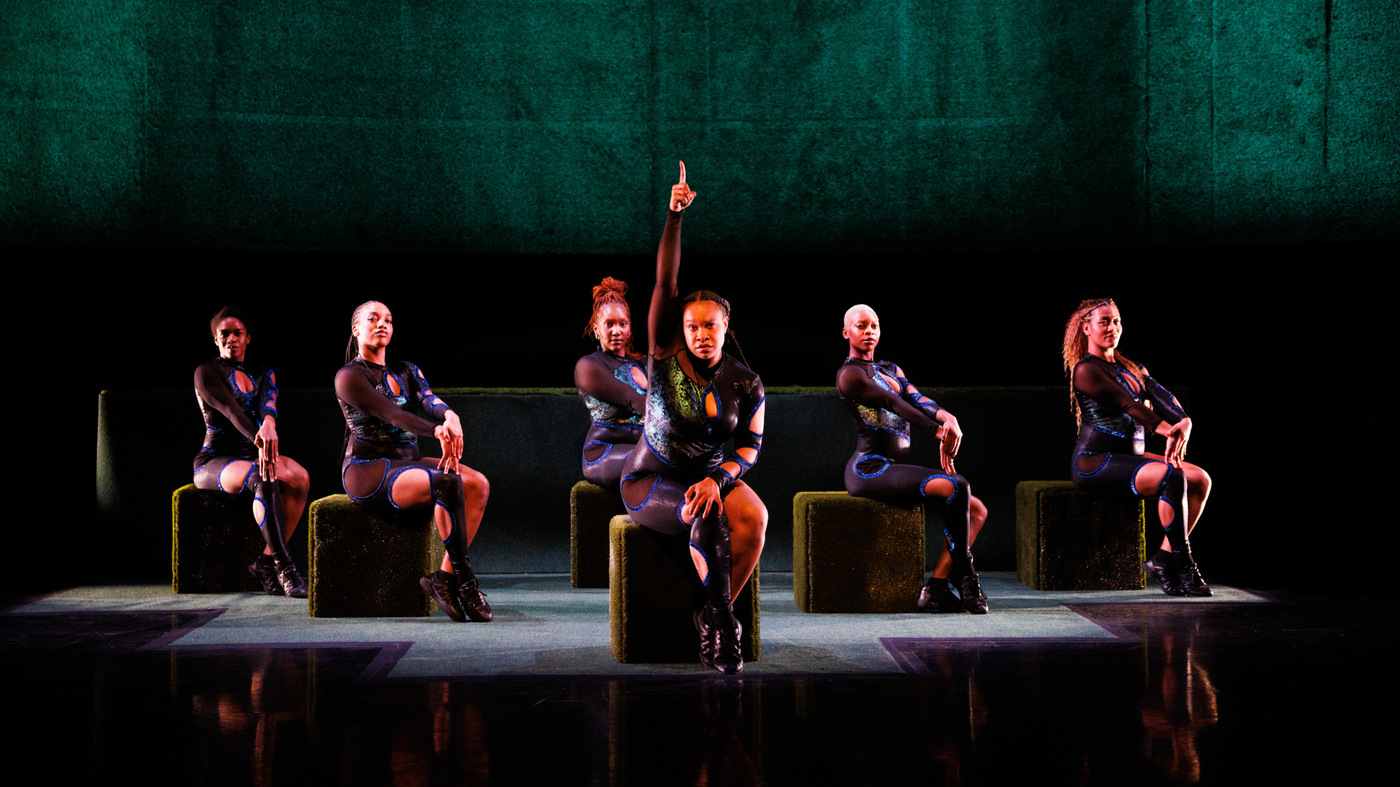
Ogemdi Ude’s MAJOR explores the physicality, history, and politics of majorette dance–a form that originated in the 1960s in the American South, where Black femme teams at Historically Black Colleges and Universities created a sensual yet strong movement style, accompanied by marching bands.
Ude, and all of her collaborators, have had some interaction with majorette dance before creating this work–whether they practiced majorette dance themselves, or they watched and revered dancers in videos online. We spoke with Ude about the work, diving into how collaborators have revisited their past selves and formed connections with majorette dancers today.
Tell me a bit about your work MAJOR.
MAJOR is a dance theater performance that explores the history, physicality, interiority of majorette dance. It’s a reflection on what it means to enter into a nostalgic body while still being present in the body that you dance in today. I've collaborated with dancers who are mostly from the Deep South to think about this form [majorette dance] that was integral to the ways that we saw ourselves developing as a femme in our youth, how we have developed as femmes in new ways by being contemporary dancers in New York, and what happens in that glitch space and that confusion when you try to go back to a body that you once looked up to, but that is no longer your path.
It’s a reflection on what it means to enter into a nostalgic body while still being present in the body that you dance in today.
– Ogemdi Ude
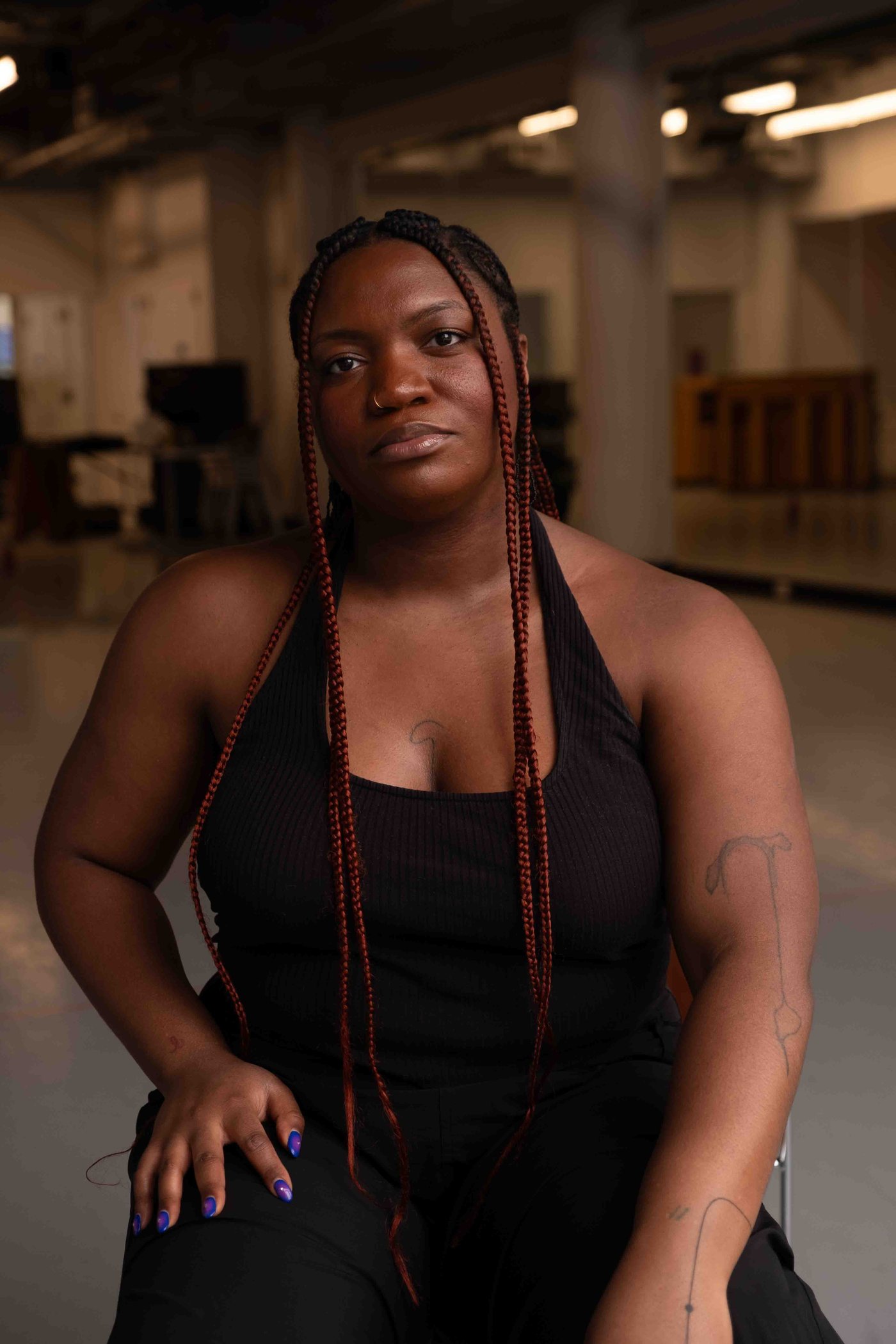
You’ve spoken before about your childhood experiences informing MAJOR. What made you come back to majorette dance?
I was practicing majorette dance from roughly the ages of 11 to 14, and it was a time where I felt really dedicated and focused on improving myself constantly; I always felt like the underdog in a way that encouraged me. Then as I started to struggle in post-modern dance and contemporary dance, it was getting to a point where I was feeling like I didn't understand my identity as a performer at the time. I thought, ‘what was the last time that I felt like I was carving an identity for myself and dance making?’ And that was with majorette dance.
It was in 2019 or so when I started to think about these forms a little bit more deeply, and then we started making MAJOR in earnest in 2023. It felt like the time to jump my brain back to this younger body and see if it can help me source a new way to move and a new way to be present in my body.
MAJOR investigates and draws largely from majorette dance. In your eyes, what does bringing majorette dance to a work on the concert stage do? What’s illuminated, what changes, what isn’t captured?
Moving [majorette dance] to a concert setting asks us to really honor and give space to a form that isn’t always centered–many people do center it at these football games, but it isn't always centered. Many people do center it at majorette competitions, but it isn't always centered. What felt most important was to center the form as something that is deeply valuable and something that is an essential Black cultural artifact.
I like to think about what it means to center someone's exploration, and center someone's return, and center someone being an amateur of the form.
– Ogemdi Ude
The concert dance space, set in a theater or on a stage, allows us to really flip things on its head and ask, what do we expect when we go watch concert dance? How do we expect the performers to have trained? What do we expect them to be invested in? Oftentimes, when you're going to go see a dance performance you think, ‘well, they should have been training in this exact form since they were three years old, everything should be refined, everything should be really clear.’ What I really love about MAJOR is that I like to call this the ‘B-team.’I like to think about what it means to center someone's exploration, and center someone's return, and center someone being an amateur of a form. The concert setting allows us to explore what it means to be perfect or to master something, and how are you allowed to still expose yourself when you are not in full mastery.
I also think about how to play with time, how to play with narrative, how we can start to draw out a history through theatricality. It’s an exploration of the through lines and the questions that the form inspires without always having to rely on spectacle. It's important to think about how this [majorette dance] draws people in, how it performs out, but I also think that theater spaces allow for deep intimacy and for moments of holding, pausing, and leaning into all of these different elements.
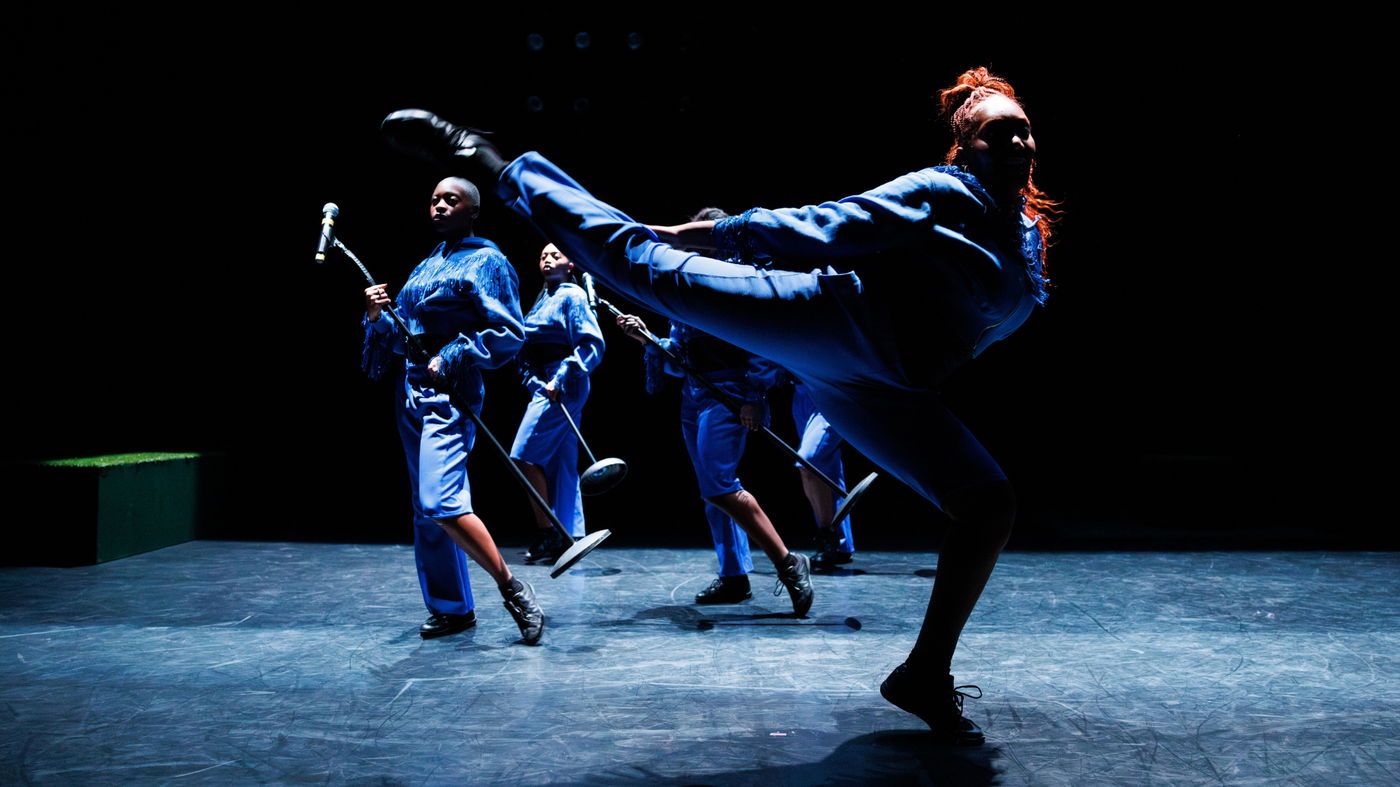
There was a lot of in-depth and first hand research that went into creating MAJOR. How did it feel to go to the games in person, where majorette teams perform, and talk to the teams themselves?
When you're young in the South, you're always watching these dancers. I used to love sitting behind them in the stands, and feeling like I was a part of their line, a part of their pyramid–I was witnessing them with such fondness. Returning to majorette performances at games in adulthood really puts me back in that childhood body. I thought of how these are the people I look up to, and then I remember that I'm 10 years older than all these dancers because they're college performers.
Returning to majorette performances at games in adulthood really puts me back in that childhood body.
– Ogemdi Ude
It still packs this energy of reverence, and this energy of ‘I want to be that someday.’ We have this moment where we talk about being ‘grown girls’ in the piece, and we're thinking about how these majorette dancers were our grown girls–they were the people that we looked up to, and the people that we were being informed of. It makes us ask, what does it mean to present ourselves in our full femme-ness?
The history is also illuminated by these conversations that we've had with different teams, particularly while we were on tour in Nashville. We got to work with the Tennessee State University team, The Sophisticated Ladies, and talk to some of the foundational members of their team about how the form has developed and what the form meant for them at that point in time. These conversations really made us fill out the world of majorette dance into this space, and consider that this is a whole ecosystem. We are such a small part of it, but we are so excited to continue digging into all of the different elements of it.
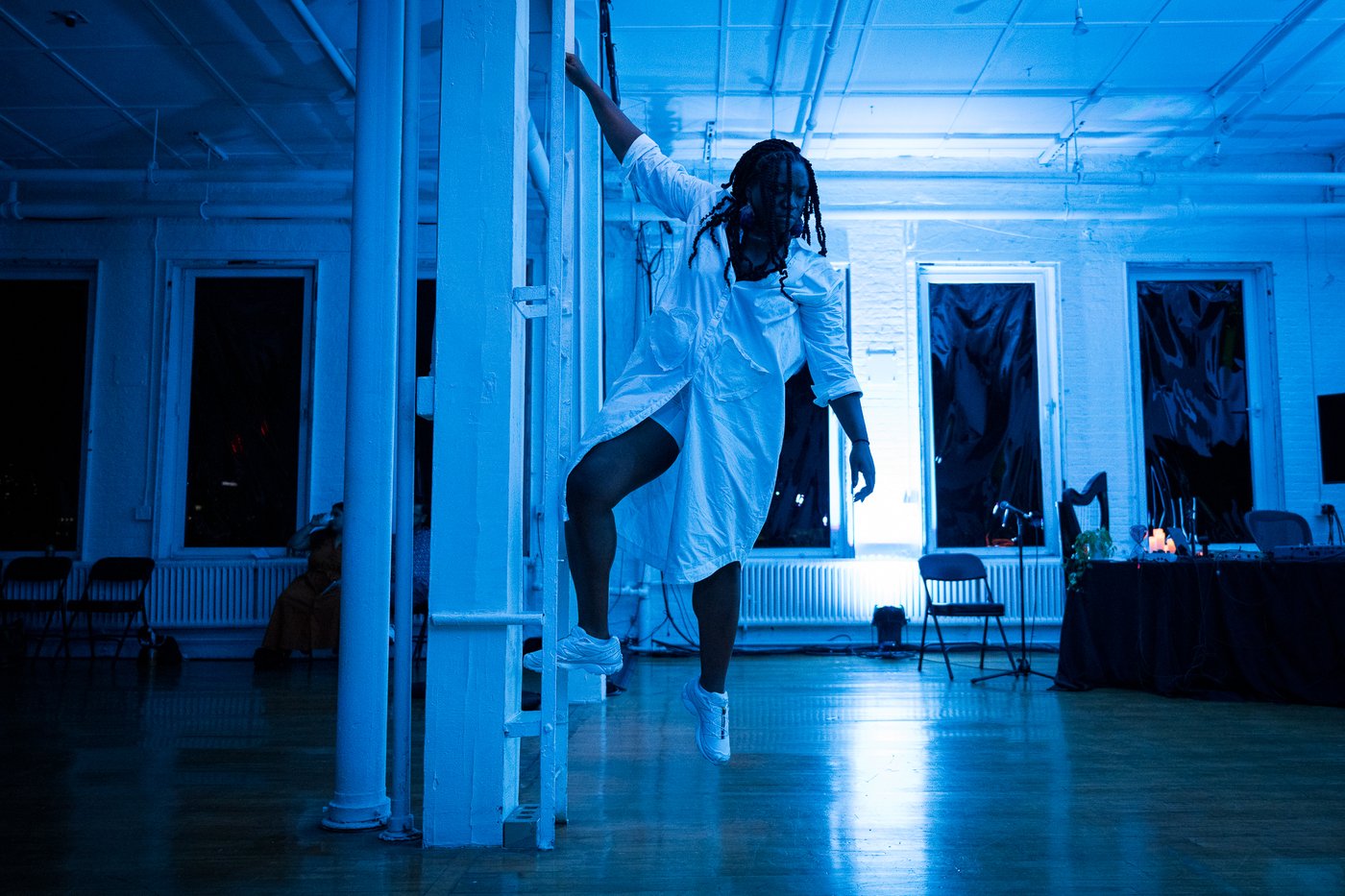
Can you talk a bit about the performers of MAJOR? What was it like working with your cast?
I have a very fabulous cast. The current cast is Selah Saint Jean, song aziza tucker, Jailyn Phillips-Wiley, Camille Phelps, Kayla Farrish and Junyla Silmon, with music by Lambkin. Chanel Stone is a former collaborator, and then there's a whole host of people who collaborated with us in the research stages of the work.
Most of the dancers grew up in the South, or were in the South for an extended period of time. All of the dancers had some reverence of and introduction into majorette dance, whether that was obsessively watching YouTube videos in their room or actually being on a majorette team. What felt most essential to me when casting the work was an investment in the ideas of ‘what does it mean to enter into a past dream space, and how do you want to engage in effort?’
What does it mean to not drop, to hold the energy of the space, to command the stadium?
– Ogemdi Ude
The dancers are so physically wise, and they are so dedicated to the fact that this performance gets harder and harder each time you do it, because you really are pushing your effort [in MAJOR]. In majorette dance, you don't learn how to drop out of your energy. Oftentimes in contemporary dance, we're thinking about how to reorganize our energy, and work with more ease in some places. But in majorette dance, you're exhausted, and you have to figure out the next stage of overcoming it. The dancers and I have talked a lot about ‘What does it mean to upkeep and hold that energy throughout? What does it mean to not drop, to hold the energy of the space, to command the stadium?’
Working with the team has been such an absolute delight; a Black femme space that is so loving and thoughtful, and informed by grace and gratitude towards the form. There’s a lot of excitement to be able to practice movement outside of the ways that the cast traditionally practices. It’s really allowed us to enter a space of experimentation that we're all venturing into together, and finding how we can hold each other while we continue navigating that experiment.
What was one of the most memorable moments in creating MAJOR?
The first time that we got to work with the marching band at Brooklyn United Music and Arts Center at their Brooklyn rehearsal space, we had eight of their [majorette] dancers, six of my dancers, and then 12 of their drummers. The whole room was just so loud and so full of energy. From the beginning of this work, I had thought ‘What the hell would it be like if I got to put a marching band on stage? How exciting would that be?” To see it really come into fruition, to see us work cross-generationally in MAJOR, and then to feel the command of the dream that this piece is a part of a larger system was illuminated in the actual work.
On most of our tour stops, we've been working with local majorette teams and marching bands. We've had truly one rehearsal to pull together a new ending each each night, Each time, we think how can we integrate with our community deeply and thoughtfully, and give reverence to the people who are continuing to hold this form full time. That always feels like a really magical explosion.
The whole room was just so loud and so full of energy.
– Ogemdi Ude
This summer, you’ll be presenting MAJOR on our outdoor stage. How does this setting impact the work?
Majorette dance is supposed to be outside. Majorette dancers command energy–when you’re outside, there's so many things you could witness, but you just focus on witnessing them. It's the beauty of performing outside, of performing at football games, of performing at parades; it's really a command of attention and energy.
It is also a huge task in trying to figure out what it means to continue this effort, to pursue this beautiful performance in the midst of more extreme conditions. There’s also an aspect of enjoying this as a community; when we're outside, you have passersbys who will stop–you have the energy of ‘I'm in the warmth of the summer, I'm in the warmth of the space, and I also get to be in the warmth of this performance practice.’ [Performing] outside always feels like it asks us to get to the point, it asks us to be really distinct in what we want to share. You're holding time differently than inside of a dark theater where it's like, ‘Oh, now lights are going, so you can tune into that now.’ In a theater, you're sitting in a space that you feel like you have more opportunity to take in all of these production elements. Getting back to the raw dancing with being outside is going to be deeply, deeply exciting.
What questions do you want Pillow audiences to ask themselves when watching MAJOR?
I want people to check in with themselves and ask, what does it mean if you ever wanted to return to a past body? What does that do to the body you're in now? What are things that you loved as a kid? What are the things that made you feel like you were a person, made you feel like you had a body, you have substance, and is there a way that you can get back into that now? And what will it do for you if you do, whether or not that's playing a specific sport, dancing to a particular song, being in a different dance style? How does that return really impact the place that you're in today?
What are things that you loved as a kid…and is there a way that you can get back into that now?
– Ogemdi Ude
I also want audiences to consider what it means to look towards Black cultural forms that have so much detail, and fluency, and fullness, but aren’t always given respect. It's been asked of me, when describing MAJOR, what are the different elements and disciplines that majorette dance is composed of? My response is that majorette dance is majorette dance. It is a discipline in and of itself, and each team has a different style, a different approach. You could even say that certain teams, like Jackson State’s Prancing J-Settes, have their own genre of dance as well.
I hope that MAJOR can command a space which really illuminates how Black dance is so fluid, and full, and has such a distinct variety. How lucky are we to be able to dance in the ways that stewards continue to hold onto outside of a concert dance setting.
This blog post was written by Lucy Kudlinski and published on July 10, 2026.
Read More Pillow Picks
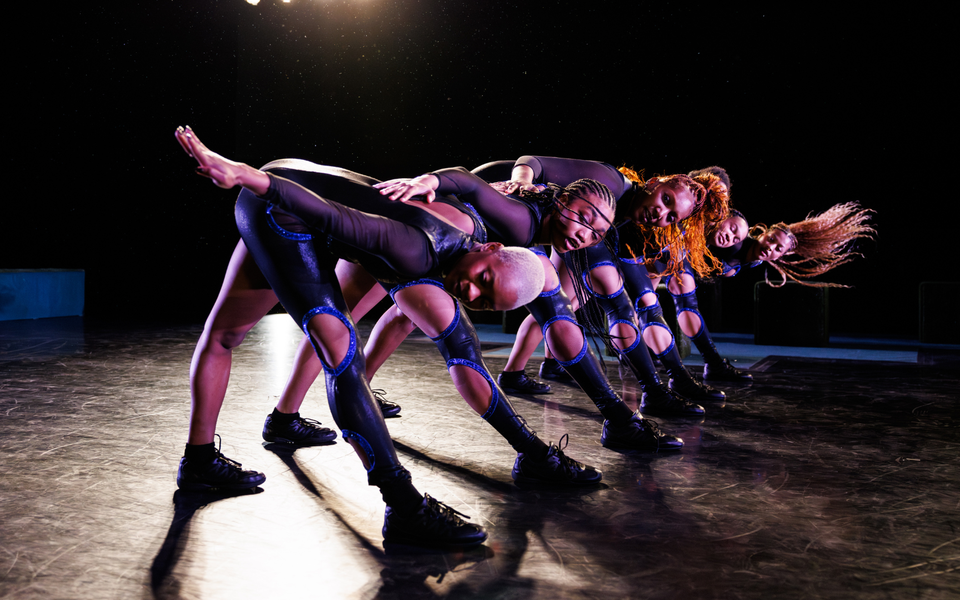
Ogemdi Ude on commanding energy and effort in "MAJOR"
Ogemdi Ude’s "MAJOR" explores the physicality, history, and politics of majorette dance. We spoke with Ude about the work, diving into how collaborators have revisited their past selves and formed connections with majorette dancers today.
Behind the Magic: Moments of Connection at the 2026 Season Opening Gala
What Gets Lost When the Body Becomes Data
Ilya Vidrin will make his Pillow debut in Festival 2026 with "Proxies." In this guest post on the Pillow's blog, he considers dance, technology, and the limits of what can be captured.